




Polymarket International and Kalshi have pushed their event-contract platforms deeper into stock-linked and corporate-metric wagers, with Polymarket traders placing more than $220 million across roughly 31,000 stock-related markets by early September. The growth has caught the attention of securities lawyers who warn that these prediction markets expanding into company-linked contracts remain far smaller than the underlying stock market but are growing fast enough to raise real investor-protection concerns.
Nvidia, Apple and Tesla Lead the Action
Polymarket International launched individual-stock contracts in October 2025, and by early September nearly 60% of the more than $220 million wagered had gone into bets on individual-stock price moves, according to an analysis by research firm Allium prepared for Reuters. Nvidia, Alphabet, Apple and Tesla were the most popular names, with the remainder split across ETFs and stock indexes. Traders typically pick yes or no on whether a stock or index hits a set level by a set date.
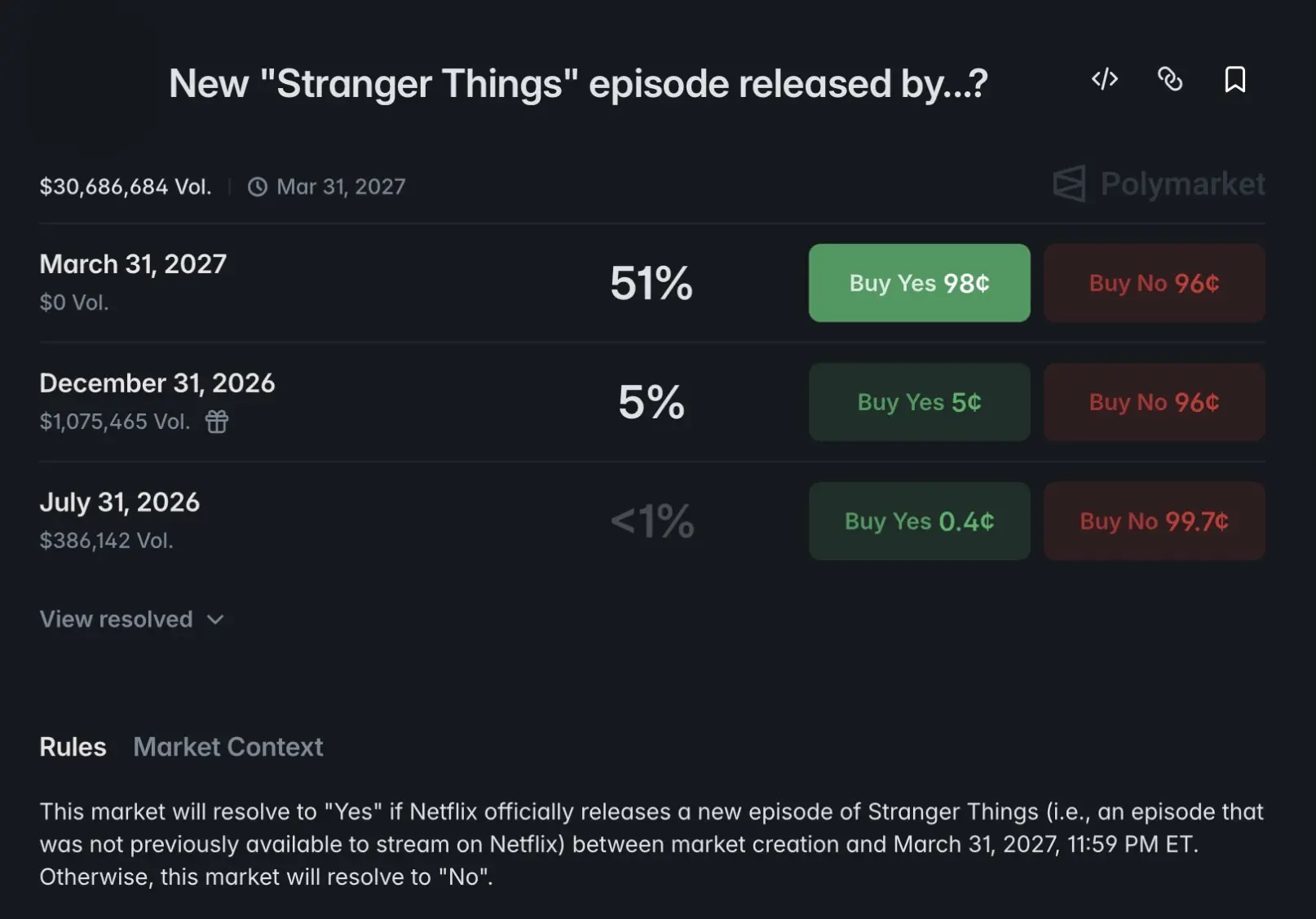
One wallet identified by Allium ran roughly 1,300 trades on Apple contracts alone, generating $175,000 in volume with positions structured to produce a small profit regardless of which side won. Kalshi does not currently offer individual-stock bets, but it runs around 2,500 markets tied to indexes and corporate metrics on a typical day, including contracts on new iPhone launches and Tesla delivery volumes.
Lawyers Flag a Regulatory Gap
Under U.S. law, contracts tied to a single company’s stock are generally treated as security-based swaps – derivatives regulated by the SEC and largely restricted to professional investors. Yesha Yadav, associate dean at Vanderbilt University Law School, said this is a new frontier in the evolution of market structure, adding that innovation is moving at an extraordinary pace.

James Angel, a finance professor at Georgetown University, said Polymarket International’s offshore legal structure makes it harder for U.S. regulators to monitor trading on the platform, calling it exactly the kind of situation that should be keeping regulators up at night. Ben Schiffrin, a former SEC official who now leads securities policy at Better Markets, said insider trading can happen with corporate metrics just as easily as with stocks, and that overseeing it is the SEC’s job. The push for tighter prediction-market safeguards has grown alongside the CFTC’s insistence that it should regulate these products as derivatives, even as the SEC and CFTC jointly sought public comment in June on which agency should take the lead. The SEC declined to comment for this story, and the CFTC did not respond.
Two Polymarkets, Two Rulebooks
The offshore Polymarket International offers individual-stock contracts, while the separate, CFTC-regulated U.S. Polymarket exchange does not, though it lists a handful of corporate-metric markets. Both companies, alongside Kalshi, say they monitor for misconduct and refer relevant cases to U.S. authorities; a Polymarket spokesperson said market integrity is central to its operations and that it works to restrict U.S. users’ access to the international platform.
The platforms are courting institutional investors as well as retail traders, pitching event contracts as round-the-clock hedging tools even as the broader surge in leveraged and stock, commodity and prediction-market trading volumes draws more scrutiny to how these products are priced and policed. Nvidia, Alphabet, Apple and Tesla did not respond to requests for comment.
The post Stock Bets Put Prediction Markets Under Fresh Regulatory Scrutiny appeared first on ReadWrite.
Recent Comments