



Independent senator David Pocock has accused the Albanese government of undermining its own pledge to break the connection between gambling and sport, after it emerged betting company logos could remain on professional sporting jerseys until the end of 2031.
Children across Australia could continue seeing gambling brands on the jerseys of their sporting heroes for more than five years under transitional provisions in the federal government’s gambling reforms.
The legislation bans wagering company logos on professional sports jerseys, but existing sponsorship arrangements can continue during a five-year transition period, potentially keeping the branding in place until December 31, 2031.
The delay has drawn a sharp response from ACT independent senator David Pocock, who has been campaigning for a comprehensive ban on gambling advertising and has called on sporting clubs to voluntarily abandon betting sponsorships sooner.
“We are in an absurd situation where by the time of the legislation’s three-year statutory review, jerseys may still have betting logos on them,” Pocock said, according to The Guardian.
Pocock also called on clubs to end their existing jersey sponsorship arrangements “at the earliest opportunity.”
Responding on social media, Pocock said the extended transition was incompatible with the government’s stated ambition of separating gambling from Australian sport.
“The Govt has talked a lot about breaking the nexus between gambling and sport but allowing betting company logos on team jerseys until potentially as late as 2035 won’t do that,” Pocock wrote.
“We are in an absurd situation where by the time of the legislation’s three-year statutory review, players may still be wearing these logos.”
The government says the transition period is intended to balance its reforms with existing commercial agreements. Communications minister Anika Wells said one unnamed sporting club has a jersey sponsorship deal extending until 2031.
“In trying to strike a balance here between grandfathering existing arrangements and ensuring viability, that’s what we got to,” Wells said.
Wells said she hoped sporting organizations would end wagering sponsorships earlier where possible, but argued those decisions ultimately rested with the clubs.
The controversy follows the government’s package of gambling advertising reforms, which includes a new national “Wagering Advertising Opt-out Register.” The register is intended to give Australians a single mechanism to opt out of wagering advertising from online content providers and will be administered by the Australian Communications and Media Authority.
However, the reforms stop short of the comprehensive advertising ban recommended by the late Labor MP Peta Murphy’s landmark parliamentary inquiry.
Pocock has argued that the legislation will “not break the connection between sport and gambling” and will fail to sufficiently reduce children’s exposure to wagering advertising.
The criticism predates the latest dispute over jersey sponsorships.
Earlier this month, Pocock tabled a petition signed by more than 700 Canberrans calling for a full ban on gambling advertising. More than 16,000 emails had also been sent to federal parliamentarians through his Stop Gambling Ads campaign.
“The major political parties are showing just how captured they are by vested interests. They are listening to donors and lobbyists rather than experts and communities,” Pocock said at the time.
He said the legislation represented a “weak, watered down bill” that would not adequately protect children from what he described as an “extraordinarily predatory industry”.
The senator has also linked the gambling debate to broader concerns about lobbying and the influence of industry over federal policymaking. In a separate social media post promoting an ABC Four Corners investigation, Pocock said recent events had demonstrated “the power of vested interests over public policy” and called for tougher lobbying laws and restrictions on the “revolving door” between government and industry.
Pocock condemns gambling jerseys amid reform backlash
The Alliance for Gambling Reform has similarly attacked the final package, saying the agreement between Labor and the Coalition amounted to “weak” and “timid” reform.
Alliance chief advocate Tim Costello said the major parties had missed a rare opportunity to substantially strengthen protections against gambling harm.
“The reforms that will now go through the Federal Parliament are cosmetic over substance and reflect the major party’s intent to prioritise power, money and vested interests over the welfare of Australians,” Costello said.
The Alliance argues the legislation falls far short of the Murphy inquiry recommendations, which included a comprehensive gambling advertising ban, stronger restrictions on inducements, a national gambling regulator and treating gambling harm as a public health issue.
It also criticized the government’s reliance on an opt-out model.
“An opt-out register will not be effective in preventing harm, and it is not what Australians are calling for,” Costello said.
Alliance chief executive Martin Thomas warned that children were increasingly being reached through sophisticated digital marketing as well as traditional sports broadcasts.
“The evidence shows that underage kids as young as 14 are being targeted through social media to download gambling apps,” Thomas said, adding that children were also being exposed to what he described as a “tsunami of gambling ads” through television and sport.
The organization said the government’s measures “will not protect children, will not delink sport and wagering and will not end the saturation of media ads” Australians encounter.
The jersey provisions have become a particularly visible test of that promise.
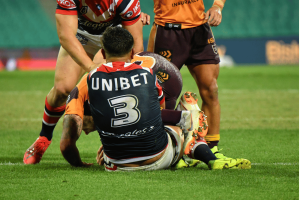
According to The Guardian, seven NRL clubs currently have wagering or lottery branding on their jerseys, with several agreements running until at least the end of the 2028 season. The Sydney Roosters extended their longstanding UniBet jersey sponsorship in July 2025, with the branding also appearing on the club’s women’s jerseys.
Public health expert Samantha Thomas said the lengthy transition made it “difficult to take the government seriously” when it claimed it wanted to break the nexus between gambling and sport.
“The government has effectively said that they recognise that gambling sponsorship is harmful to children and then decided that it can continue for the next five years,” she said.
Martin Thomas said the grandfathering provisions “underscored how little a difference these compromised gambling reforms will make.”
Liberal MP Andrew Wallace, who crossed the floor to oppose the legislation, has also criticized the five-year transition, arguing that two years would have provided sporting organizations sufficient time to secure replacement sponsors.
For Pocock, a child in Year 8 today could potentially reach the end of secondary school while still watching professional athletes take the field wearing gambling company branding.
Featured image: Nat Butcher via WikiCommons / CC BY 2.0
The post Pocock condemns ‘absurd’ delay that could leave gambling logos on sports jerseys until 2032 appeared first on ReadWrite.
Recent Comments