




Key takeaways
- Most of America’s 6 million female breeding pigs are confined in gestation crates — tiny enclosures that prevent them from even turning around. It’s considered to be one of the cruelest farming practices.
- Voters in California and Massachusetts have voted to prohibit the use of the crates, and prohibit the sale of pork from farms that use the crates.
- The pork industry has sued California and Massachusetts numerous times in a longrunning effort to repeal the laws, and have failed in each court case.
- The industry has also lobbied Congress to pass legislation that would nullify the laws, and they just had a partial victory, with their desired legislation added into the House Farm Bill.
- The fight is now in the US Senate, which is drafting its own Farm Bill.
Last year, nearly 130 million pigs were raised for meat in the US, but they didn’t come out of nowhere; they had parents. Or as pork producers call them, “breeder pigs.”
Since the 1970s, producers have been keeping most of the breeding females — known as sows — in tiny enclosures called gestation crates. It’s a way for producers to more closely monitor the pigs’ pregnancies and control their feeding, but in doing so, they’ve created one of the worst forms of widespread animal abuse.
The crates are so small that the pigs — who are highly social and intelligent — cannot walk or even turn around, and it causes many to bite the bars of their crate and engage in other repetitive behaviors that are signs of chronic stress. They’re confined in the crates for virtually their entire life, until they themselves are shipped off for slaughter when their reproductivity wanes at around five years old.
The animal welfare scientist Temple Grandin has likened gestation crates to forcing a human to live in an airline seat.
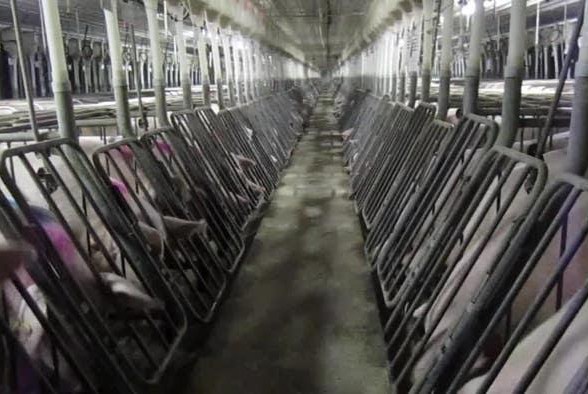
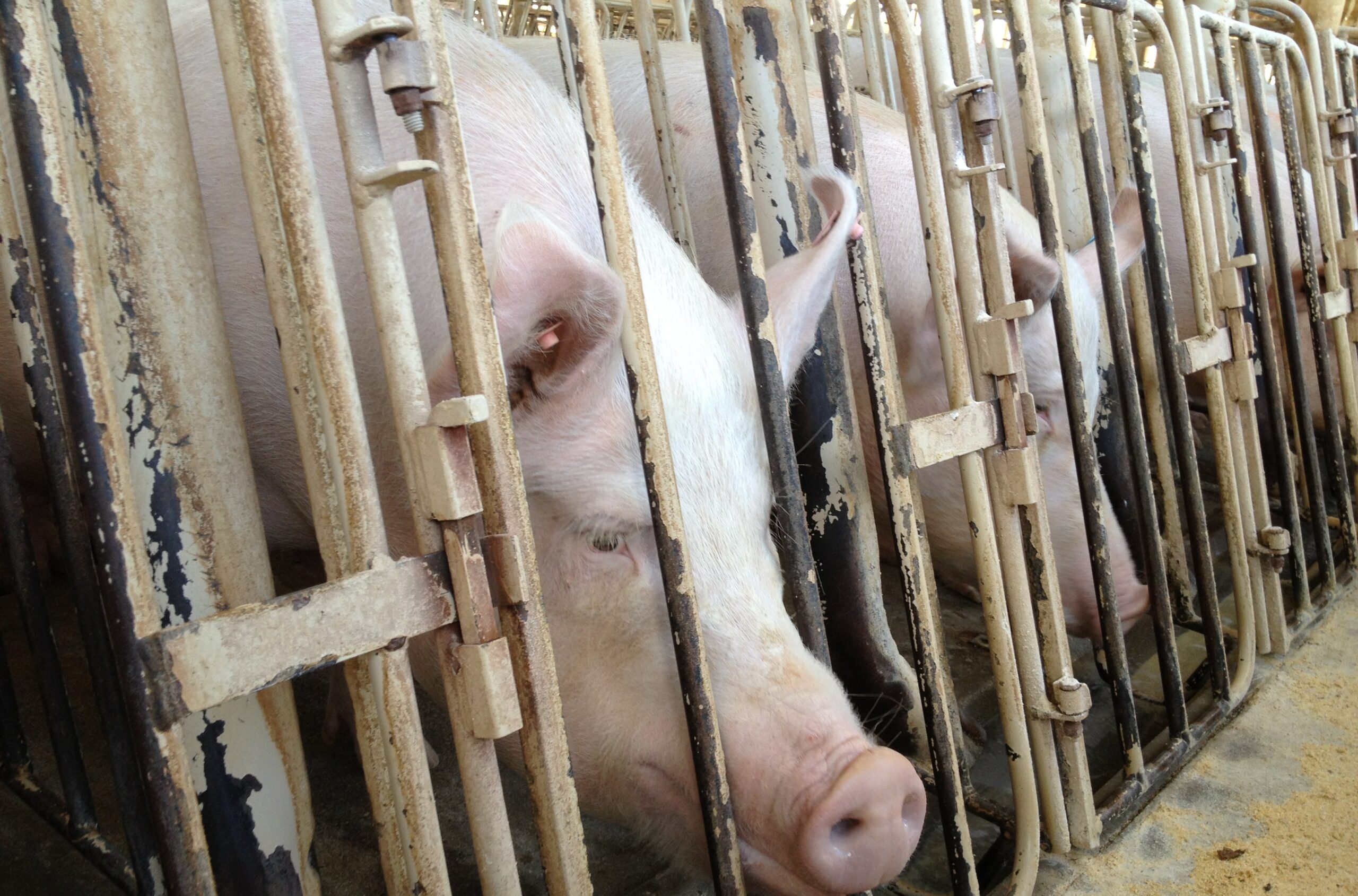
If the use of these crates disturbs you, you’re not alone. In 2002, Floridians — via a ballot measure — voted to require pregnant pigs to have at least enough room to turn around and extend their limbs, effectively banning the use of gestation crates in the state. Four years later, Arizona voters did the same. Later, seven other states followed suit.
As important as these laws are, they weren’t that effective in actually getting many pregnant pigs out of gestation crates because most of those states host little of the country’s pork production. But everything changed in 2016, when Massachusetts put a measure on the ballot to not only prohibit the use of gestation crates in the state, but to also prohibit the sale of pork from farms that use such confining crates, whether the farm is in Massachusetts or not. (Disclosure: I worked on this campaign during my time at the nonprofit Humane World for Animals.)
It passed overwhelmingly, with 78 percent of voters in support. And two years later, 63 percent of California voters supported a nearly identical law. All of a sudden, pork producers around the country had to stop using gestation crates if they wanted to sell meat into these two states that, combined, contained almost 15 percent of the US population.
But now, these overwhelmingly popular laws have a chance of being upended — and gestation crates being used to confine more pigs in the future — if a provision in the new Farm Bill, now being hashed out in Congress, becomes law.
The fight over caging pigs is falling across unexpected lines
Not everyone has embraced freeing the sows from their intense confinements.
Several meat trade groups, along with Triumph Foods — one of America’s largest pork companies — have sued California and Massachusetts numerous times to try to overturn their gestation crate laws. The industry’s legal argument centers around the claim that the animal welfare laws violate a legal doctrine called the dormant commerce clause, which puts some limits on states enacting laws that affect other states.
But all of the lawsuits have failed, including one from the National Pork Producers Council that made it to the US Supreme Court, which in 2023 ruled to uphold California’s law as constitutional.
Companies and industry groups have also worked with members of Congress for over a decade to introduce federal legislation to nullify laws like those in California and Massachusetts. The latest iteration is called the Save Our Bacon Act, originally proposed last year.
This effort, which for years went nowhere as standalone legislation in Congress, now has a decent chance at becoming law as part of the new Farm Bill, a package of legislation that is supposed to be reauthorized every five years and is the main vehicle for federal agriculture and nutrition policy.
In late April, the House of Representatives passed its version of the Farm Bill, which included the language from the Save Our Bacon Act.
It’s “really a Save Our Crate Act,” Brent Hershey, a hog farmer who opposes it, told me. “A vote for the farm bill,” he said, “is a vote to cage an animal that can’t walk or turn around.”
Hershey had used gestation crates for much of his decades-long career raising pigs in Pennsylvania, but a few years ago, he had a change of heart thanks to his daughter, who was upset about the crates.
“One day, my daughter just looked at me and she said, ‘Dad, we are not going to accept that,’” Hershey told me last year. “‘We are going to demand that you do it a better way.’” Hershey converted his hog-rearing practice to group housing, in which several pregnant sows are kept together in a larger pen — a common way producers convert their facilities to accommodate these laws.
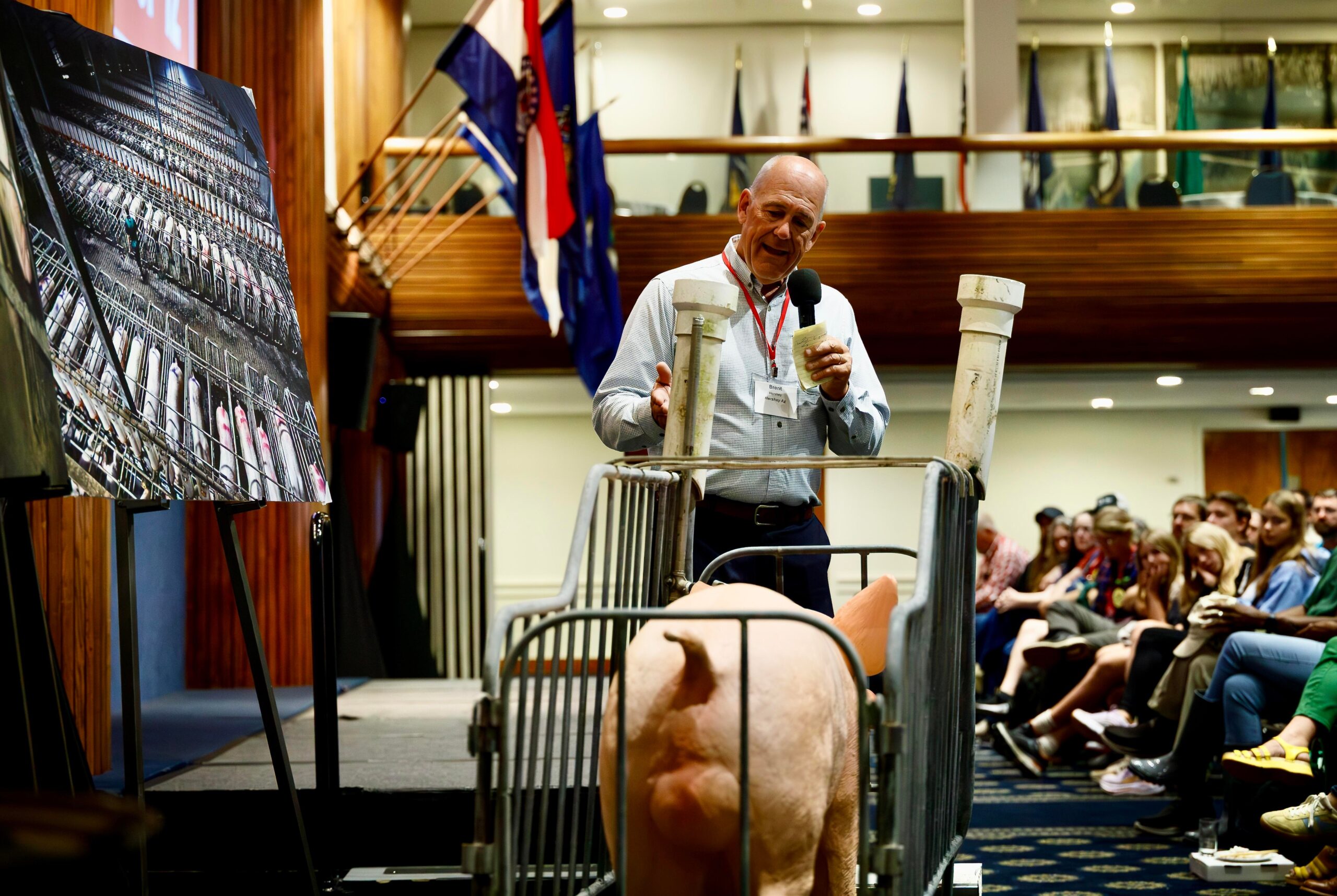
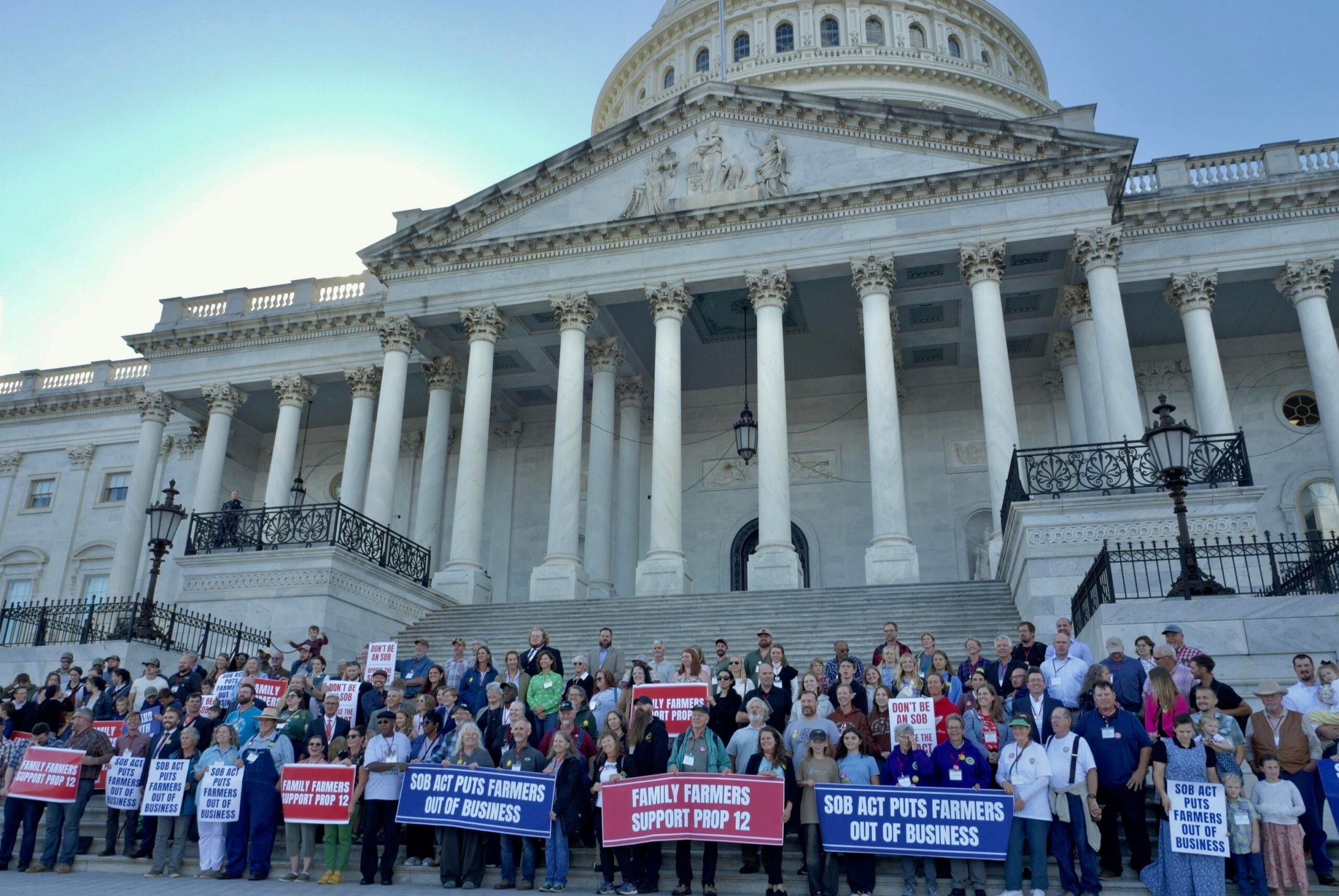
Many other hog farmers, like Hershey, don’t want Congress to overturn California and Massachusetts’ laws on moral grounds, but also on economic grounds: They have converted their barns to comply so they can sell their pork in those states. Overturning them means that the time and money they spent on doing so would have been for naught.
According to an April 2025 USDA estimate, 27 percent of US hog producers had made or were in the process of making investments to comply with the laws, a figure that has likely grown over the last year.
Clemens Foods, one of the largest pork companies in the country, has vocally opposed the Save Our Bacon legislation.“Many in the industry, including Clemens, have invested significant capital (and human capital) to meet the regulations set by the people of California and Massachusetts,” a Clemens spokesperson told Vox in an email last year. “Accordingly, Clemens remains vehemently opposed to any legislative or regulatory action that would overrule” the laws.
But not all of the industry feels the same way. Smithfield Foods, the nation’s largest pork producer, has publicly supported federal legislation to nullify California and Massachusetts’ laws. Seaboard Foods, another major pork producer, declined to comment for this story and referred me to the National Pork Producers Council, which declined an interview request and declined to answer detailed questions over email.
In a statement, an NPPC spokesperson said that if left to stand, California’s law “will prompt a patchwork of similar state laws that will only continue to drive up the cost of farming.”
The organization pointed me to a recently published white paper, which hasn’t been peer-reviewed, from economists at North Dakota State University and the US Department of Agriculture. The researchers found that from January 2024 (when the California law went into effect) to January 2026, the price of pork in California increased by 73 cents per pound (a 15 percent increase) and 63 cents in Massachusetts (its law had gone into effect in August 2023). However, the researchers note, more than half of the price increase can be attributed to “retail amplification,” or supermarkets adding a premium for this kind of meat — beyond any increase in actual production cost.
Just how much it costs hog producers to comply with California and Massachusetts’ laws, whether by retrofitting their barns or building new ones, has been in dispute. The National Pork Producers Council has argued it costs producers at least $3,400 per sow. Hershey has said it cost him around $600 per sow. While there was the upfront cost to converting to a crate-free system, he told me it’s paying off; the percentage of sows who die prematurely has declined, and they are also producing more piglets.
Just as the pork industry is divided over gestation crates, so too is Congress. For years, congressional division over gestation crates mostly fell across partisan divides, with Republicans largely backing the pork industry’s effort, and Democrats largely opposing it. But this year has been different. Rep. Anna Paulina Luna, a Republican from Florida, introduced an amendment with bipartisan support to strip the Save Our Bacon Act out of the Farm Bill. The House Rules committee allowed votes on dozens of amendments to the Farm Bill, but not Luna’s.
“We shouldn’t be doing anything at the federal level that would remove the autonomy of a state to decide what’s best for their farmers and what their citizens choose to put on the ballot and then pass by law in that state,” Luna said on Fox News earlier this month.
Now, the Senate is drafting its own version of the Farm Bill, and if it passes, the two chambers will need to reconcile any differences between the two.
I reached out to every Senate Democrat’s office to ask whether this attempt to overturn the will of California and Massachusetts voters would be a red-line issue for them in the Farm Bill, and a few — Sens. Ed Markey (D-MA), Elizabeth Warren (D-MA), Chris Van Hollen (D-MD), and Alex Padilla (D-CA) — replied with strong opposition to the Save Our Bacon Act. Sens. Cory Booker (D-NJ) and Adam Schiff (D-CA) have also been outspoken on the issue.
“It makes no sense for Republicans in Congress to bigfoot individual states’ efforts to set higher food safety and animal welfare standards — especially those implemented through a mandate from large majorities of those states’ voters,” Van Hollen wrote in a statement to Vox, adding that it doesn’t belong in the Farm Bill.
“This is a highly controversial and poisonous policy that ignores the will of the people,” Markey and Warren wrote to Vox in a statement. “These state laws were overwhelmingly supported by a popular vote — they shouldn’t be overridden because of big-dollar lobbying.”
Perhaps most importantly though was who didn’t respond, including Sen. Amy Klobuchar (D-MN). Klobuchar is the ranking chair of the Senate Agriculture committee, making her the lead Democrat on the Senate Farm Bill. In previous Congresses, former Sen. Debbie Stabenow (D-MI) held that position and managed to prevent past iterations of the Save Our Bacon Act from advancing in the Senate. But Klobuchar is currently running for governor of Minnesota, the second largest pork producing state after Iowa, and the agribusiness sector has been a top donor to her 2026 campaign committee.
The meat industry’s anti-democratic bent
The attempts to overturn California and Massachusetts’ laws by congressional action is perhaps the inevitable outcome of an industry that is intent on maintaining practices it can’t defend in the courts — or in the court of public opinion.
We’ve been here before. In the early 2000s, animal protection groups increasingly went undercover to film inside farms and slaughterhouses and documented terrible practices — like pig gestation crates and employees horrifically abusing animals. The videos often made national news, shocking millions of Americans. But instead of meaningfully improving animal welfare, industry groups instead successfully lobbied state lawmakers in around two dozen states to introduce legislation to make it illegal to videotape inside farms. Several passed, though some have been struck down in the courts as unconstitutional.
The meat industry has also managed to contort regulations in order to receive other special treatment under the law. Animal farms, for example, are exempt from several pollution and labor laws and exempt from most state animal cruelty laws.
There are also less blatant forms of subversion, in which the industry has withheld information and misled consumers and policymakers:
- Meat industry trade groups and companies have funded campaigns to distort and downplay the science on meat’s environmental impact.
- Meat companies can make highly deceptive claims about animal welfare on their product labels and in marketing without consequence.
- The industry has largely evaded environmental regulations on the promise that it will voluntarily reduce pollution, though a recent analysis published in the journal PLOS Climate found that 98 percent of meat and dairy companies’ environmental claims can be considered greenwashing.
Much of the industry’s success at hiding cruelty and thwarting regulation stems from its penchant for storytelling — portraying itself not as a large, powerful, highly concentrated group of a few dozen companies but rather a loose network of millions of salt-of-the-earth farmers just trying to scrape by.
“The industry has always tried to use its ‘homestead narrative’ as a way of pushing pretty extreme measures,” Will Potter, author of a recent book on deception in the agricultural industry — Little Red Barns: Hiding the Truth, from Farm to Fable — told me. “Coming out of journalism, I just always had this faith…that if people are exposed to the truth and to facts, the truth will win out.”
At least in the case of gestation crates and other intensive farming practices, this has held true. When voters are presented with the facts on how they affect animals, they vote to ban them. But as the Farm Bill has revealed, those votes may not be safe.
In the coming months, if the Senate manages to put together its own Farm Bill, we’ll find out where its members land: on the side of one industry group, or the will of millions of voters who’ve made it clear that locking pregnant animals in tiny crates has no place in the country.
Recent Comments