



The story most people tell about tribal casinos is neat and convenient. That it is a modern industry, seized as an economic opportunity.
Robert J. Madden’s research points somewhere much older.
“We’re talking about a very deep cultural tradition,” he tells me, “probably one of the oldest continuous cultural practices in North America.”
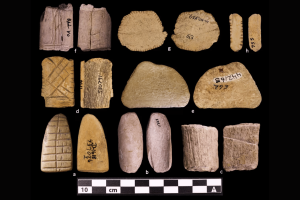
Not decades old. Not centuries old. If his research is right, Native American gambling traditions stretch back 12,000 years, forming an unbroken line from Ice Age campsites to present-day casino floors. It lands at a moment when the legal structure governing tribal gaming is being tested in ways its authors never anticipated.
Tracing the origins of tribal gambling and Native American dice games
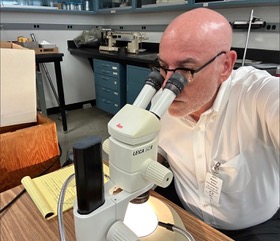
Madden, who is the author behind “Probability in the Pleistocene: Origins and Antiquity of Native American Dice, Games of Chance and Gambling” approached the problem with the instincts of a litigator. A former trial attorney turned archaeologist, evidence had to be consistent across time and strong enough to support inference without guesswork.
When we’re talking about Native Americans and games of chance and gambling, we’re talking about a very deep cultural tradition… probably one of the oldest continuous cultural practices in North America.
Robert J. Madden, University of Colorado PhD candidate
“You don’t have to make any huge leaps,” he says. “You can just kind of step, step, step… back into the past and follow it all the way back.”
Starting with well-documented historic Native dice, catalogued in detail by early ethnographers such as Stewart Culin, Madden created a kind of diagnostic checklist. If ancient artifacts matched those characteristics, they could reasonably be identified as dice used in games of chance. Applying that framework across the archaeological record, he identified hundreds of sites where the same forms appeared again and again, stretching further back in time than anyone had previously demonstrated.
The deeper he looked, the more the gaps disappeared. What had once seemed like isolated evidence began to look like continuity.
How the Indian Gaming Regulatory Act shapes modern tribal casinos
Modern tribal gaming rests on a framework that is comparatively recent. The Indian Gaming Regulatory Act (IGRA), passed in 1988, created the structure that still governs casinos on tribal land. It was designed as a compromise between the competing interests of tribal sovereignty, state authority, and federal oversight, and it remains exactly that.
Congress set out clear goals that gaming should support “tribal economic development, self-sufficiency, and strong tribal governments,” while remaining regulated and protected from corruption.
At the same time, the law formalized how power is shared. Tribes retain the right to regulate certain forms of gaming on their lands, but large-scale casino operations require negotiated agreements with states and federal approval.
The result is a system built around jurisdiction and who controls what, where, and under which conditions. The age-old system has shaped an industry worth billions, but it is rooted in a definition of gaming that reflects the late 20th century, not deep history.
Historical accounts of Native dice games describe something vivid and communal.
“It was a real raucous affair,” the University of Colorado PhD candidate says. “You’d have… people all around gathered, very loud… and all kinds of side bets going on.”
Players threw multiple dice at once, while referees announced results and scorekeepers tracked progress with counting sticks. Around them, spectators gathered in large numbers, betting on outcomes and engaging with one another. These were social environments, places where strangers became acquaintances and communities intersected.
“It brought people together that didn’t know each other well,” he says, creating opportunities to “trade, swap information, all kinds of things.”
Archaeologically, that social function leaves traces. The oldest dice often appear at sites long suspected to be gathering points, which were places where different groups converged, perhaps seasonally, to interact. The presence of gaming artifacts reinforces that interpretation, suggesting that games of chance were part of the mechanism that made those convocations work.
Prediction markets vs tribal gaming
The legal framework built in 1988 is now facing pressure from technologies that do not fit neatly inside it.
Prediction markets, such as Kalshi and Polymarket, allow users to trade on real-world outcomes while presenting themselves as financial exchanges. This has become the center of a legal dispute being waged across the country. If these platforms are treated as financial instruments rather than gambling, they may fall outside IGRA altogether.
Tribal leaders argue that this would sidestep the system of tribal-state compacts and undermine regulatory authority on tribal lands. When we spoke to tribal gaming law professors Steven Light and Kathryn Rand this week, they warned that such platforms could strip “governmental authority from both states and tribes,” shifting control away from the framework established by the IGRA.
“These so-called prediction markets are an attempt to bypass tribal authority and recast gambling as a financial product. We will not allow that. We will stand united to defend tribal sovereignty and the integrity of Indian gaming,” IGA Chairman David Z. Bean said at last week’s Indian Gaming Association Tradeshow and Convention.
The argument is already moving through the courts. Companies like Kalshi have claimed that geography should not determine jurisdiction in the same way it does under IGRA, challenging the idea that betting activity must be tied to physical location. This runs directly against the territorial logic of the law, which is built around gaming “on Indian lands.”
At the same time, partnerships between prediction platforms and major sports leagues are accelerating the issue, pushing these questions into mainstream markets rather than niche corners of finance.
How Native American dice are changing the narrative around tribal gambling
For years, Native American groups have sometimes been portrayed as late entrants to a pre-existing gambling economy or “Johnny-come-latelies,” as Madden puts it, stepping into a profitable sector once legal pathways opened.
His research inverts this idea, suggesting that Native gaming traditions long predate the systems they are now regulated within. Dice games tied to chance and wagering appear long before European contact and continue through the historic period without interruption. That continuity makes it difficult to describe tribal gaming as a recent development.
“Is this just the same as… opening up an auto repair shop?” Madden asks. “Or is this something more… a deeply rooted cultural activity?”
Modern regulatory frameworks tend to treat tribal casinos primarily as economic enterprises. Acknowledging them as expressions of a long-standing cultural practice could fundamentally change how those frameworks are interpreted, or at least how they are debated.
When history enters the courtroom
Legal disputes over tribal gaming already draw on history, particularly when questions of sovereignty and continuity arise.
“I do know that courts… have considered the extent to which this is a long-standing practice,” Madden says.
Historical records from the period of European contact, combined with archaeological evidence from the last few thousand years, provided a partial picture. Madden’s work pushes that timeline back dramatically, giving a snapshot of a much deeper foundation for those claims.
IGRA itself recognizes tribal authority over certain forms of gaming, especially traditional and social games, while imposing layered regulation on others, which assumes a distinction between cultural practice and commercial activity.
“I think it’s possible” the findings could influence future cases, he says, though he is careful not to overstate the point. At the very least, it “puts it in a much deeper… light” than ever before.
Beyond law and policy, the research appears to carry a quieter but equally significant implication. It suggests that ancient Native Americans were engaging with the underlying principles of probability and randomness far earlier than is often acknowledged.
For Madden, that recognition matters.
“Native American… intellectual accomplishments don’t typically go together in the same sentence,” he says. “I hope this is something that Native American people can take pride in.”
A living system under pressure
Modern tribal casinos generate significant revenue and fund services in many communities, with the National Indian Gaming Commission suggesting Gross Gaming Revenues (GGR) of $43.9 billion for fiscal year 2024. They operate within a regulatory system built in 1988, one that continues to evolve under legal and technological pressure.
Prediction markets, digital platforms, and changing interpretations of jurisdiction are testing that system from multiple angles. Meanwhile, the historical record behind the activity itself is becoming clearer and more difficult to ignore.
If gaming is not just an industry but the latest expression of a cultural practice that has endured for 12,000 years, then the conversation around it becomes harder to simplify. The dice, in a sense, never stopped rolling.
Featured image: Robert J. Madden
The post The original casino? How 12,000-year-old Native American dice could upend modern tribal gambling debates appeared first on ReadWrite.
Recent Comments