




Not everybody acquiesced when Jeffrey Epstein came bearing gifts.
Harvard University barred Epstein’s donations after he pleaded guilty to solicitation of a minor in 2008, a development that frustrated his friends on the faculty, according to an internal review. One physicist, a woman whom Epstein had bragged about and racially misprofiled in an interview that Science published after his death, had pointedly refused a donation just months before his second arrest in 2019. “Would I be interested in receiving funding from a wealthy man who had also been convicted of a sex offense?” she told Science. The answer was no.
But others, many others, said yes when Epstein came calling. Among them: the Palm Beach Ballet, the Melanoma Research Alliance, the UJA-Federation of New York, and MIT Media Lab. Bill Gates once legitimized such giving, evangelizing to other would-be billionaire philanthropists over brunch at the convicted sex criminal’s mansion. Gates has since repeatedly apologized for his dealings with Epstein, but the multi-billionaire’s foundation has authorized an external review examining Gates’s ties and assessing their philanthropic vetting policies.
In recent years, the Epstein files have triggered mass public dismay over the idea that a sex criminal could buy — or, in these cases, donate — his way into elite circles. And yet today, over a decade after most of these checks were cashed, not much has changed about how organizations behave when bad people try to give to good causes. By using his giving to ingratiate himself with the rich and famous, Epstein may have embodied philanthropy at its absolute worst, most craven, and self-serving. But he was far from the only wealthy person wielding donations to win powerful friends, or to weasel his way into the public’s good graces.
Key takeaways
- Jeffrey Epstein fashioned himself as a philanthropist and fundraiser to his famous friends. Despite the fallout from the Epstein files, most charities still don’t have plans for dealing with toxic donors.
- People like Epstein or the Sackler Family give to charity to launder their reputations. By donating to something good, psychologists say, they also may feel entitled to do something bad.
- Charities often struggle with when to cut off toxic donors, especially if their behavior falls into an ethical gray area. It’s hard to say no when you don’t have enough money to begin with.
- But accepting money from a sleazy source is rarely worth it in the long run. If word gets out that an institution looked the other way, it can lead to serious reputational damage.
“Many organizations will say they know their donors, especially the large ones,” said H. Art Taylor, president of the Association of Fundraising Professionals (AFP), the largest network of its kind in the country. “But do we really?”
Obviously, very few people, elite donors included, have committed crimes as vile as Epstein’s. And yet, a 2023 study found that a full half of fundraisers have encountered a donor who falls along a spectrum of unsavory behavior, be it a board member with a sleazy reputation or an environmental philanthropist who has made their money in the oil industry.
Every time such a donor gives, it sparks a difficult trade-off. Is it okay to accept money from a bad person if it goes to something good? There is, after all, not enough philanthropy on offer to go around as is. But if fundraisers inevitably tread into the gray areas, where should they draw the line?
The justifications of the scientists, charities, and academics who accepted Epstein’s donations clearly do not pass the sniff test. Their knee-jerk response should’ve always been a categorical no, something nearly everyone who accepted Epstein’s money now admits.
Epstein demonstrates just how bad the worst-case scenario can be for charities and universities that take money from the wrong person. MIT Media Lab’s association with Epstein ultimately led to an avalanche of bad press, resignations from key researchers, and a permanent reputational stain. Gates could’ve spent this year basking in the warm glow of his foundation’s historic decision to donate itself out of existence, the crowning jewel of his philanthropic legacy. Instead, he will spend it apologizing to his staff, testifying to Congress, and yearning for the one that got away, his ex-wife, Melinda French Gates, who reportedly left him in part over his Epstein ties.
But bad donors can still harm good organizations even when they are not as obviously bad as Epstein proved to be. Research shows that organizations that accept toxic donations, even from less catastrophically scandalous philanthropists, often struggle to build trust with new donors in the long run, because they come to be seen as morally complicit. What might feel like a justifiable trade-off in the short-term — a dollar from a bad person is still a dollar for a good cause — can quickly devolve into a long-term liability.
Why bad people give to good causes
Many people who took Epstein’s money later pleaded ignorance of his crimes, despite his being an unusually clear case of a rotten donor. Sure, he paid a small army of digital advisers to clean up his image a smidge, but his 2008 arrest was still eminently Googleable.
But not every shady donor is so easy to spot. Instead, said Patricia Illingworth, a professor of philanthropy and ethics at Northeastern University and author of Giving Now: Accelerating Human Rights for All, the majority “are problematic mainly because of how they made their money” or because they’ve engaged in behavior that is morally dubious, but not outright criminal.
Think of the Sackler family, who made their fortune on the highly addictive painkiller OxyContin and went on to become major donors to the Metropolitan Museum of Art, the Guggenheim, and the University of Oxford, among other arts and cultural institutions. There’s also Warren Kanders, who was forced to step down from the Whitney Museum’s board in 2019 in response to public outrage over his company’s sale of tear gas.
Illingworth believes that such people opt to give for two main non-altruistic reasons. One is reputation laundering, which has a long history in philanthropy. In 1888, Alfred Nobel read a premature obituary calling him the “Merchant of Death” for getting rich off the sale of explosives. Nobel was so spooked by the moniker that he decided to give away all of his assets to establish the Nobel Prizes. Today, the name Nobel is more broadly associated with peace and science rather than blowing stuff up. Everyone prefers to be known for their gifts to charity, not for accelerating deforestation or covering up workplace abuse.
The other reason is somewhat counterintuitive: It’s called the moral licensing loophole, a psychological phenomenon identified by the researchers Benoit Monin and Dale T. Miller in 2001. This theory states that when someone does something nice — such as giving to charity — they subconsciously feel entitled to do something bad. It’s like somebody on a diet who’s “been eating healthily for a couple of months, and then they just eat a pint of ice cream,” said Illingworth. Only in this case, the pint of ice cream may portend something far more serious.
“If it’s Jeffrey Epstein, and he comes along and says, ‘Well, I really want to make a donation to the media lab at MIT,’ then you should think twice about that,” she said. “Because he’s done a lot of bad things, and there’s a good chance that he’ll follow the good act with a bad act.”
The clearest archetype of this thinking is probably Sam Bankman-Fried, the FTX cryptocurrency fraudster, who donated over $190 million to charity before his arrest in 2022. Bankman-Fried was temporarily the most successful disciple ever of the effective altruism (EA) movement’s idea of earning to give, which encourages people to make a lot of money primarily so they can give it all away. Ultimately, however, Bankman-Fried’s fraud tarnished the credibility of effective altruism as a whole, and embarrassed many of its leaders, some of whom had been warned before about Bankman-Fried’s unethical behavior. Some charities — especially EA darlings like the Centre for Effective Altruism — lost out on millions in promised funding, and EA itself is still digging itself out.
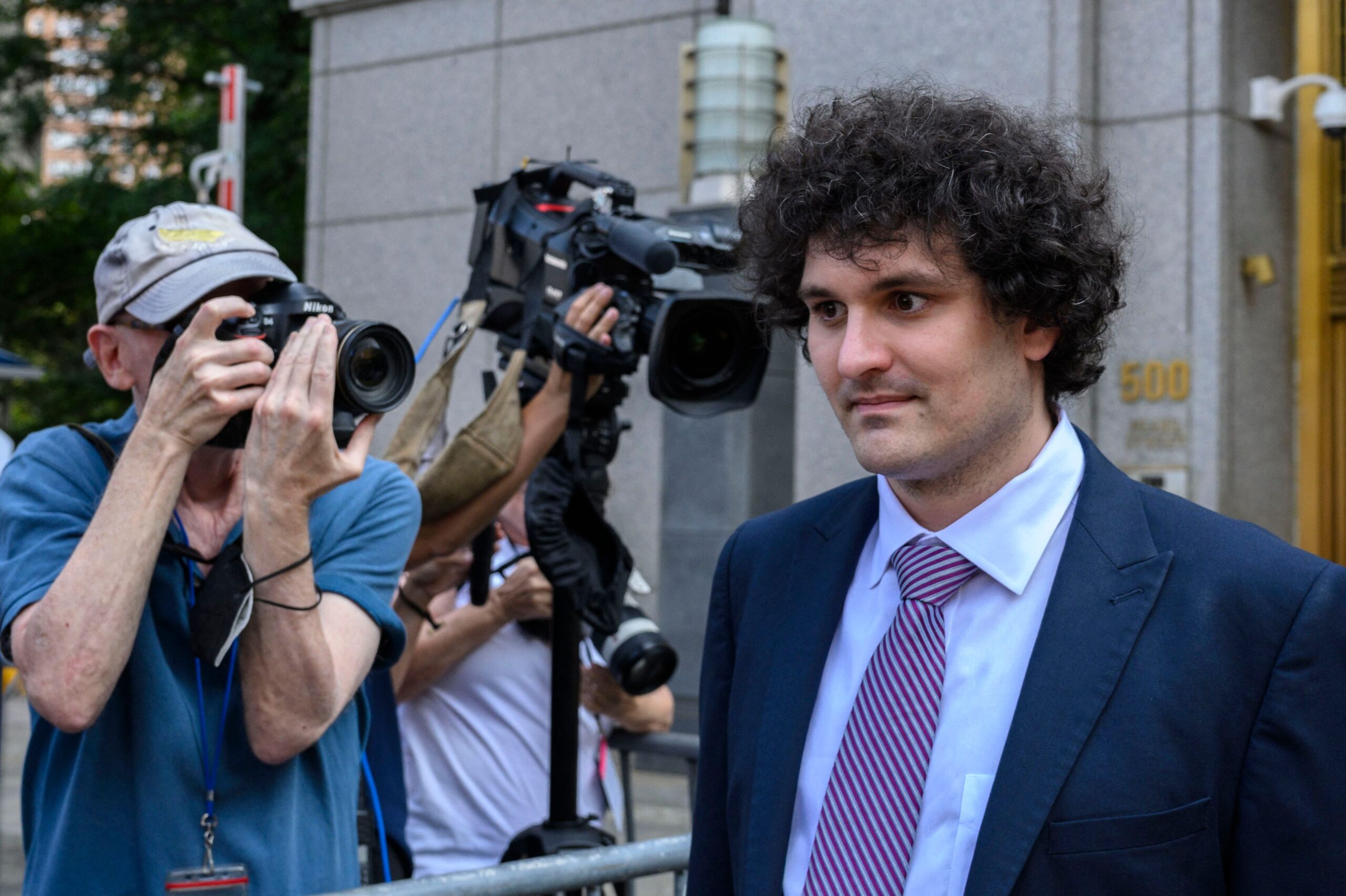
Many have speculated that Bankman-Fried justified, or morally licensed, his crimes under the utilitarian notion that it is okay to steal if it means more money for causes like pandemic prevention and AI safety. In Twitter direct messages with my former colleague Kelsey Piper, he implied that his decisions were mostly untethered to a genuine concern about ethics, but rather were part of a “dumb game we woke westerners play where we say all the right shiboleths and so everyone likes us.”
But even so, Bankman-Fried and some of those around him still appear to have found some justification for their behavior in charity. Bankman-Fried’s ex-girlfriend and onetime top adviser, Caroline Ellison, testified that he built his crypto empire on the idea they were making money for the “greater good,” and therefore he and those in his orbit were entitled to break the rules. “It made me more willing to do things like cheat or steal,” she said.
(Disclaimer: Bankman-Fried’s philanthropic family foundation awarded Vox’s Future Perfect a grant for a 2023 reporting project that was later canceled after his arrest. Another ex-colleague, Dylan Matthews, wrote an honest and illuminating piece in the aftermath of the tainted grant.)
But it’s easy to ignore — sometimes unwittingly — when a possibly sleazy donor comes along, especially if their crimes are only rumored or appear to be morally ambiguous at the moment. Sometimes those donors turn out to be monsters, or at the very least, crooks.
While “fundraisers do a tremendous amount of work understanding who their donors are,” Taylor told me, “no one is going to go up and ask, ‘Do you have any baggage? I want to take money from you, but have you committed any crimes?’”
Rise of the toxic donor
Disquietingly, according to a poll conducted in 2023, more than half of fundraisers said that the prevalence of toxic donors had risen in recent years. While half of the nearly 700 fundraisers surveyed had encountered a “morally tainted donor” in their work, only one-third said their employer had a policy in place for handling such donations.
Again, these are rarely the Epsteins of the world, but more commonly a broad range of people who’ve engaged in questionable moral behavior: a tech CEO whose product has sparked privacy concerns, perhaps, or a Hollywood producer accused but never convicted of sexual misconduct.
“Rarely are institutions going to be confronted with such criminals, particularly known criminals,” said Zoe Rahwan, a research scientist at the Max Planck Institute for Human Development, who conducted the poll. Rather, “it’s this area of moral ambiguity where there’s no criminal conviction” that “is really difficult territory,” she said, because “there may be a sense that the person or the company they work with does some good but also maybe does some ill for society.”
The majority of those surveyed said they would generally accept donations from people who’ve done or been accused of unethical things, but haven’t been convicted of a crime. While fewer fundraisers said they would accept a donation from someone with a criminal conviction, a full 37 percent made an exception for those convicted of white-collar crimes.
The general public, when asked a similar set of questions, said nonprofits should be able to accept donations from those accused of a broad range of unethical behavior, with 74 percent tolerating racism and more than half accepting of white-collar crimes like Bankman-Fried’s. However, they were less likely to approve of such donations if they knew the funds were directly obtained by criminal means. Over one-third said they were willing to accept gifts from donors convicted — not just suspected, but convicted — of sexual assault.
It’s not necessarily the case that people don’t care who’s giving them — or their favorite charity — money. Surely, every fundraiser would prefer to accept donations only from the most squeaky-clean sources they could find. But for most charities, there’s never been enough money to go around to be choosy. While funding shortages are particularly acute today — about 70 percent of the country’s nonprofits are facing funding cuts under the Trump administration — many groups are accustomed to operating on thin financial margins.
If an organization is in dire financial straits and “a slightly tainted donor comes along and says, ‘I’m willing to help and you don’t have to sacrifice too much of your reputation,’ you’re going to take the money,” Taylor told me. “You may even have somewhat of a fiduciary duty to at least consider taking the money.”
In the 1990s, many tobacco companies used predatory marketing practices to boost sales of menthol cigarettes in Black communities, a strategy that included offering donations to local nonprofits in those neighborhoods as a form of reputation laundering. Among them was a job training charity then led by Taylor, who said he accepted the donation with some unease.
“We felt that if they were extracting money from the Black community, then we should be using some of that money to help the Black community,” he said. “Some people were okay with that decision and that way of looking at it. Other people weren’t.”
What we stand to lose
When a shady donor comes around, there’s often no perfect way to respond. And while they may feel more conspicuous now, much of our modern social system was initially funded by very rich people who were very imperfect.
We have public libraries today partly because Andrew Carnegie decided to give away most of his fortune — which he earned in part through abusive, and sometimes deadly, labor practices — to charity. Way back in 1905, a $100,000 donation from eugenicist John D. Rockefeller sparked an impassioned debate in the Congregational Church over whether to accept a gift from an oil baron who accumulated his wealth in such an “unscrupulous and brutal way.” In the end, they took the money, as did countless medical researchers, some of whom went on to use those funds to develop a vaccine for yellow fever and popularize the use of insulin to treat diabetes.
“Controversial donors have always been here. It’s just that now we pay more attention to it.”
Marek Prokupek, KEDGE Business School
“There are those who would argue that all money in America is tainted” by some form of exploitation, even if it took place a century ago, said Taylor. “People will never always agree that the decision was right, and that’s a tension that we have to live with in the end.”
“Controversial donors have always been here,” said Marek Prokupek, a professor at KEDGE Business School who specializes in the role of ethics in arts funding. “It’s just that now we pay more attention to it.” There may be benefits to accepting money from an unsavory donor in the short-term, he said, but institutions “risk losing the trust of their communities” and losing out on new potential supporters in the long run.
And trust is everything for nonprofits, universities, museums, and other institutions whose mission is to serve a public that’s become increasingly cynical about their motivations. Fewer than one-third of Americans say they trust wealthy philanthropists to do the right thing, down from 36 percent in 2010, and nearly 60 percent believe they have too much influence over the nonprofits they fund. That skepticism appears to have also bled into their view of the organizations those philanthropists support, with just 35 percent of Americans reporting high trust in nonprofits as of September of last year. They have also themselves become less likely to donate, at least in part because they sense the charitable world’s acquiescence to the richest of the rich.
Remember the Sacklers? For decades, the Sackler name was an enduring presence across many of the world’s most storied cultural institutions, despite their patronage’s association with the development of OxyContin, which drove millions of Americans into opioid addiction. Over a five-year period alone, they gave over $60 million to prestigious universities around the world.
Then, in 2017, photographer Nan Goldin launched a protest campaign against those institutions accused of “artwashing” the Sacklers by accepting their support. She held protests at the Guggenheim and a die-in at the Louvre. “All the museums and institutions need to stop taking money from these corrupt, evil bastards,” Goldin said in a documentary about her activism. Eventually, one by one, almost all of them did.
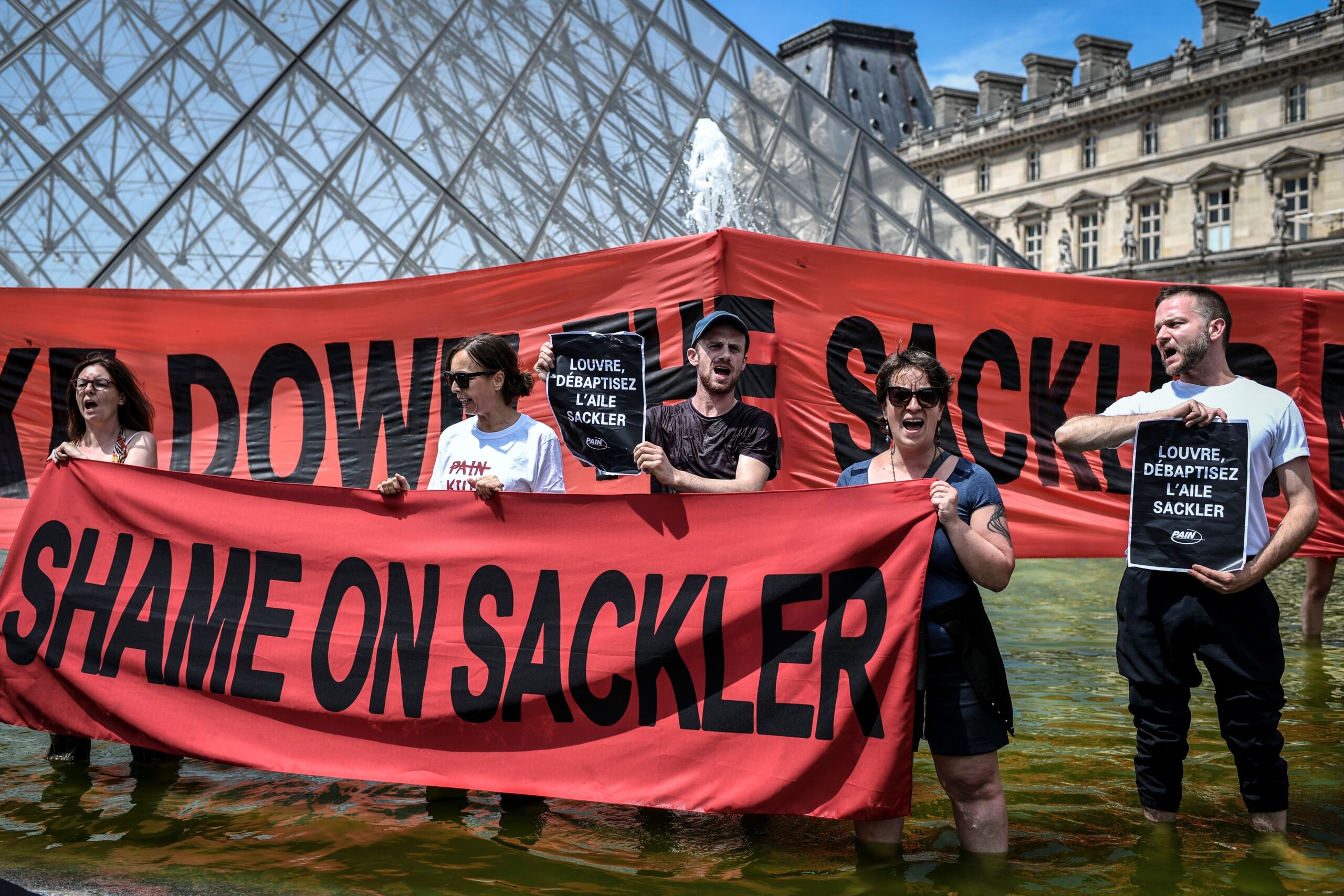
The reputational damage and bad press that came with accepting the Sackler donations were corrosive enough that many institutions — including the Louvre, the Guggenheim, and the Metropolitan Museum of Art — decided that the money was not worth it. Research shows that tainted donors also affect institutions’ bottom line, making it harder for them to make connections with new donors or, in the case of museums, presumably sell tickets.
These days, “we expect organizations to be more accountable and more transparent, and to stand for good values,” Prokupek said, not allowing “controversial donors to wash their brand.”
You don’t want to wait until the protesters show up or the allegations accumulate to establish red lines. A good rule of thumb is that if it’s not something that you’d be willing to explain away if the world finds out, then maybe say no next time a sleazy billionaire comes knocking on your door.
Thou shalt not make a deal with the devil, even if nobody ever finds out about it. In the process of sanitizing someone else’s rotten moral character, you may well end up tainting your own.
Recent Comments