




During a tense vote on a data center being built in her drought-stricken Arizona district last summer, Tucson City Councilmember Nikki Lee made an unlikely pitch: “We’re going to get a little out-of-this-world for a second, so just bear with me.”
Like many of her constituents, Lee did not want Project Blue, a sprawling 290-acre data center, gobbling up an ounce of her local drinking water. “We need to put data centers where they belong,” she said, and “we don’t think data centers belong in the desert.”
President Donald Trump’s recent bluster aside, it’s possible that the only thing as bipartisan as loving Dolly Parton is hating data centers, whose construction has become so controversial, so costly, and so backlogged here on Earth that companies like Google, Meta, and of course, SpaceX, are actively flirting with the idea of flinging them into orbit instead. Soon after the Tucson City Council rejected Project Blue’s attempt to connect to city utilities, Amazon Web Services, the secretive intended beneficiary, pulled out of the project, and another Jeff Bezos company, Blue Origin, filed a plan with regulators for tens of thousands of possible new data centers, this time, destined for orbit.

Sure, launching a hyperscale AI data center into space is still unprecedented engineering-wise, carries an unfathomably large price tag, could engender its own severe environmental risks, and may or may not draw unwelcome attention from the hunters among the stars. But for AI companies, such trade-offs might still be preferable to the terrestrial roadblocks, among them an explosive populist backlash and a 12-year wait to connect to the power grid.
SpaceX’s gargantuan initial public offering earlier this summer was predicated on the idea that it would launch a thus-far-unrealized fleet of orbital data centers to fuel much of the AI economy. The company claims that by the end of this decade, possibly as early as 2028, it will have successfully assembled an AI data center in orbit, with plans to eventually harvest a staggering 100 gigawatts of new solar energy for AI annually, equivalent to one-fifth of all US electricity consumption last year. (As always, that’s a very iffy promise.)
And Google, which has its own plan to deploy dozens of space-based data centers, released a study last December positing that as launch costs go down, they could become cost-competitive with terrestrial data centers within the next decade.
Experts tell me that it’s no longer a question of if space-based data centers could be technically feasible, but rather when they’ll be ready to launch, and perhaps more importantly, whether the math of using them to power something like AI will make much financial sense anytime soon. As of now, building a one-gigawatt data center in space would cost about $51.5 billion, according to an analysis by aerospace engineer Andrew McCalip, compared with $16 billion for one on land.
“They’re not breaking any rules of physics. Yes, there are going to be engineering challenges, but they are all solvable with enough time and money,” said Jason Aspiotis, a leading space systems engineer who now leads an orbital data center startup. “The gray area is, well, what about the economics?”
But even if this astronomically kooky plan does take off, it may not change much for those of us left on terra firma: Our energy bills will remain high, even if data centers aren’t there to drive them up. Our earthly infrastructure — affordable housing, public transit, and more — may be just as hard to build as ever. Harder even, maybe, given that crucial resources and untapped tax revenue will be literally rocketing up out of our reach.
No, if these tech giants succeed, it will not fix what’s wrong here on Earth, but merely prove once again their exemption to the gravitational forces holding the rest of us down.
Space-based data centers, explained
My father spent most of his career working in the satellite industry, and would sometimes let me waltz inside the quaint little data center housed in his office, a room I remember as roughly the size of my school’s computer lab, hosting rows upon rows of servers that I couldn’t touch, churning with a cool, mechanical hum as they crunched zeroes and ones.
AI data centers work similarly to that server room but on an exponentially larger scale, requiring far more land and energy to run, and much more extravagant cooling systems. Sending his office’s data center into orbit would have been extraordinarily difficult, and getting one of the facilities that powers modern LLMs aloft would be an even larger, more ambitious undertaking. But the benefits — namely, “cheap space (no pun intended) and power,” as my dad put it to me recently — are even more enticing.
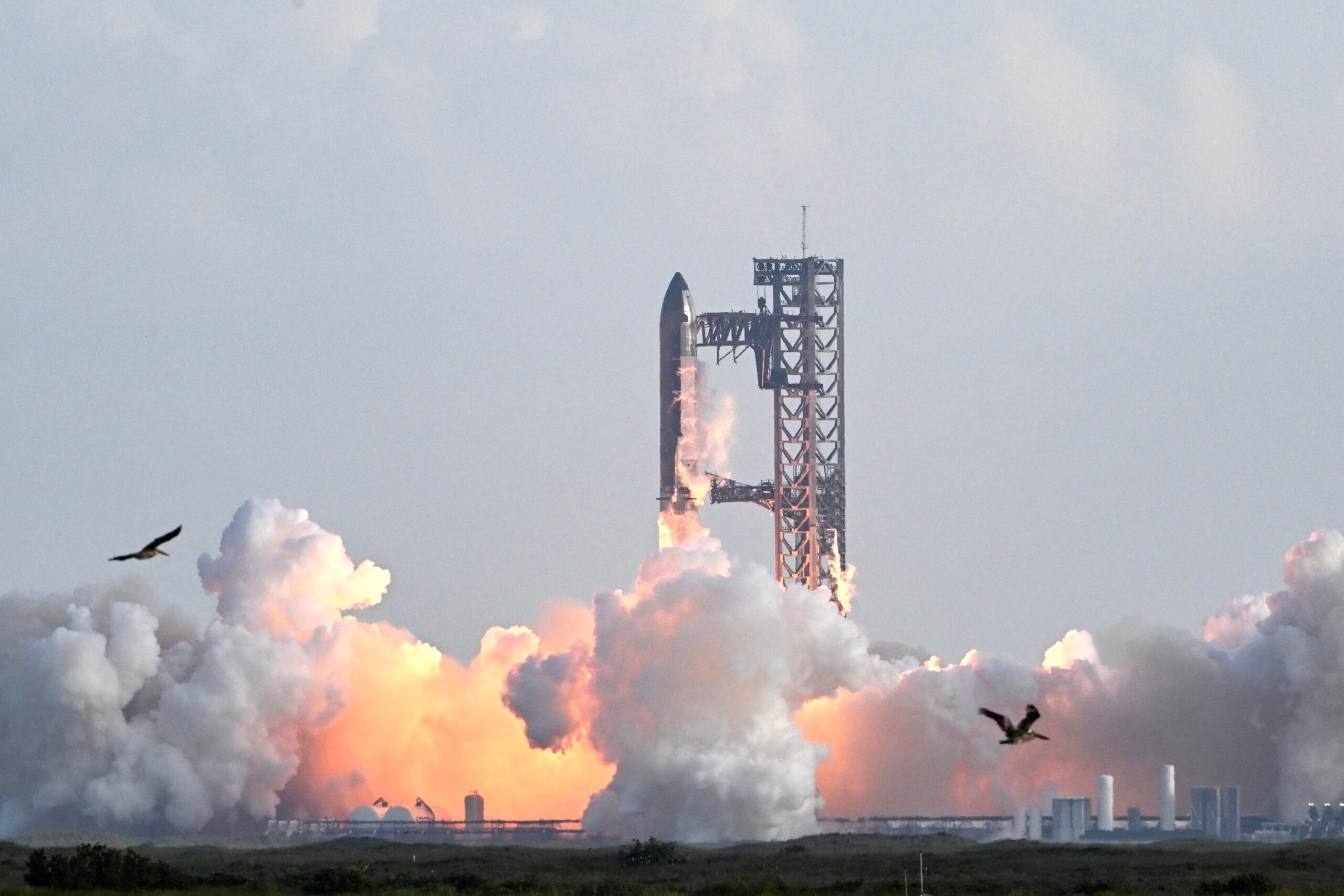
An orbital data center need not negotiate with an elected official like Lee over precious water rights to the Colorado River, though it would need to install bigger-than-football-field-sized heat radiators to keep itself cool. You can’t simply launch something that big into orbit, meaning a space-based hyperscale data center — the size of which would likely rival that of the International Space Station — would need to be assembled piece by piece, probably by robots. And while the sun would provide an endless supply of solar power to process your ChatGPT queries, it would also inflict incessant radiation on delicate circuitry. If something breaks, you can’t send a technician up to fix it. Many experts are also concerned that if an excess of space junk, which extraterrestrial data centers would inevitably produce, begins colliding like bumper cars in Earth’s low orbit, it could knock out the orbital infrastructure we already rely on, like GPS navigation and weather satellites.
Even plastic decays in space, said Sven Bilén, a professor of aerospace engineering at Penn State, who, like Aspiotis, believes that early orbital data centers will probably be “processing data from space, like spatial imaging satellites or weather satellites, as opposed to, you know, cat videos” or AI-generated reality TV slop.
But even if AI is not the lowest-hanging fruit for deploying compute into space, it is certainly the deepest-pocketed, meaning that many investors and companies like SpaceX and Google seem quite willing to shoulder the start-up costs anyway. And considering how difficult it’s gotten to build data centers on Earth, or at least in the United States, it’s indeed possible that space could become the cheaper, or at least most convenient option, more quickly than one might think.
“In some form or another, in five years, we are going to have some orbital data centers in space for sure,” Krishna Muralidharan, who leads the Center for Semiconductor Manufacturing at the University of Arizona, told me, but it’s hard to say right now whether those consist of just a few expensive prototypes, or the beginning of a much bigger swing toward orbital compute. “Only time will tell whether you’re going to have a business case for it.”
Can we send our data center problem into space?
So, is it better to have a data center in space or in your backyard?
David Reid, a member of Virginia’s House of Delegates representing Loudoun County, home to more data centers than anywhere else on Earth, says the question has repeatedly come up at his town hall meetings. Reid is the rare politician — apart from the president, anyway — willing to defend terrestrial data centers, calling them a “money-printing machine” for local schools and infrastructure. Having spent decades working in the defense and technology sectors, he is doubtful that the math on orbital data centers will ever make sense.
“I believe this is, for lack of a better term, fictional nonsense,” he said, and is “creating a distraction from the fact that local officials here on Earth still need to make better zoning decisions.”
If most of the AI industry can eventually be powered by space, as SpaceX claims, it will require millions of sprawling new satellites, in an orbit currently dotted by fewer than 20,000 of them. Though “space is really big,” as Elon Musk has put it, one million satellites would still profoundly and, likely irrevocably, transform our night sky into one in which data centers outnumber visible stars.
“Will humanity notice if there are fewer stars in the sky? Well, not so much right now,” given light pollution in many cities, said John Barentine, an astronomer and environmental advocate for the night sky. “But what if they’re replaced by these artificial stars in the night sky? Is that the point at which people will say, ‘Wait a minute, we don’t want this. We want the benefits, but we don’t want this as a consequence.’”
This is, of course, the tension also at the heart of building data centers here on Earth. To some extent, they’re the most tangible representations of how little power we have to shape the course of a transformative new technology that few trust, and even fewer asked for. It’s one thing to object to a hulking data center, but it might be another altogether to see the sigils of our digital overlords illuminating the firmament. Would a place like Tucson, one of the most beautiful places to stargaze in the world, prefer a Project Blue to a starscape marred by blinking servers in the sky?
Recent Comments