




The lawsuit, filed in the U.S. District Court for the Southern District of New York by plaintiffs Adrian Vazquez, Alexander Foley and Nicholas Ross, claims Kalshi allowed outside companies to intercept users’ communications and platform activity without their knowledge or consent. The plaintiffs seek to represent all individuals who used Kalshi’s digital platforms and whose communications, personally identifiable information, or online activity was allegedly intercepted or disclosed to third parties.
According to the complaint, Kalshi operates an online marketplace where users trade binary event contracts tied to real-world outcomes. The filing says those contracts can involve subjects ranging from entertainment to politics and international affairs, and argues that a user’s activity on the platform can reveal “the events the user considered important, the outcomes the user predicted, the amount of money the user was willing to risk, the user’s confidence in particular outcomes, and the user’s financial gains or losses.”
The plaintiffs contend that users provide extensive personal and financial information to create and fund accounts, including identity verification information, and reasonably expect that information and their trading activity to remain private. The complaint argues that because Kalshi involves wagering-like activity, users have “a heightened privacy interest in keeping their Kalshi activity confidential.”
The complaint alleges Kalshi embedded third-party scripts, pixels and tracking technologies throughout its digital platforms, allowing companies including Google, TikTok, LinkedIn and others to monitor users as they browsed markets, viewed event contracts and placed trades.
“Through these tracking technologies, third parties such as Google, TikTok, LinkedIn, and others were able to monitor users as they interacted with Kalshi’s Digital Platforms,” the complaint states. “This monitoring included, upon information and belief, users’ browsing activity, pages viewed, event contracts reviewed, account interactions, and trades or attempted trades.”
The lawsuit further alleges that Kalshi “employs over 60 different third-party trackers on its website,” including technologies associated with Google, Meta, HypeLab and Rokt, and says four trackers captured information during the process of placing trades. According to the complaint, those trackers transmitted information including the market selected, whether users bought or sold “Yes” or “No” contracts, order information, device identifiers, browser information and approximate location to third parties.
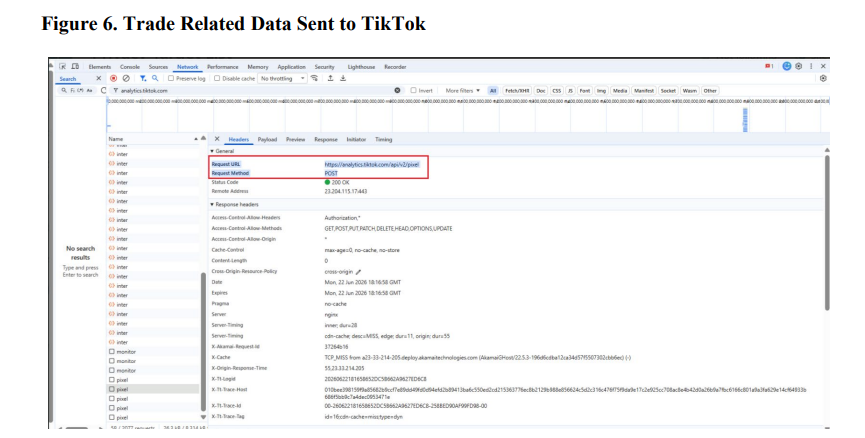
It includes screenshots that it says show data being transmitted to Amplitude, LinkedIn, TikTok and AppLovin during the trade submission process. The plaintiffs allege the shared information included trading-related details and user identifiers.
The complaint alleges Kalshi benefited commercially from the practice, stating the company “utilized data from trackers to improve its advertising and marketing campaigns, reduce customer-acquisition costs, increase trading activity, generate revenue, and to receive cash payments from the third parties receiving the data.”
The lawsuit also challenges Kalshi’s user consent process. According to the complaint, users were never required to affirmatively accept the company’s legal terms or privacy policy before creating an account. Instead, the registration page stated only that users acknowledged and agreed to Kalshi’s legal terms while the company merely “recommend[ed] reviewing” them. The complaint further alleges the hyperlink to those terms lacked common visual cues, such as underlining or contrasting colors, and users could complete registration without reading any of the documents.
The privacy lawsuit adds to a growing list of legal challenges facing Kalshi. In recent months, the company has been sued in multiple states over allegations that its event contracts tied to sporting events amount to illegal, unlicensed sports betting rather than lawful prediction markets.
In Oregon, plaintiff Ian Reynolds filed a proposed class action alleging Kalshi and related entities operate “an illegal online gambling enterprise” under state law. The complaint argues that contracts tied to sports outcomes function as prohibited wagers and seeks damages, restitution, declaratory relief and a jury trial on behalf of a proposed class of consumers who allegedly lost money trading on the platform.
A separate proposed class action filed in Alabama similarly argues that Kalshi’s sports event contracts violate the state’s strict anti-gambling laws. The plaintiffs contend that, despite being structured as federally regulated event contracts, the products operate like traditional sports wagers that should be subject to state gambling restrictions.
Kalshi has consistently disputed those allegations, maintaining that its products are financial derivatives regulated by the Commodity Futures Trading Commission (CFTC). As a CFTC-designated contract market, the company argues that federal commodities law—not state gambling law—governs its exchange. Some of the gambling-related lawsuits also challenge Kalshi’s affiliated market makers, alleging they effectively take the opposite side of customer trades, while Kalshi has described those claims as misunderstandings of how regulated exchanges operate.
The dispute has also drawn regulatory scrutiny from several states, including Massachusetts, Nevada and Washington, where authorities have challenged or restricted sports event contracts offered by prediction market operators.
Kalshi has not yet filed a response to the privacy complaint.
Featured image: Kalshi / Canva
The post Kalshi faces privacy class action over alleged tracking of users’ trading activity appeared first on ReadWrite.
Recent Comments