




In 2017, US Rep. Thomas Massie (R-KY) offered what remains one of the most insightful explanations of Donald Trump’s rise from any elected official. Massie, a Tea Party libertarian in the Rand and Ron Paul mode, was wondering why so many of his supporters could back an un-libertarian candidate like Trump. His conclusion was grim.
“They weren’t voting for libertarian ideas — they were voting for the craziest son of a bitch in the race,” Massie said. “And Donald Trump won best in class, as we had up until he came along.”
Last month, the “craziest son of a bitch” took Massie down. Trump — miffed by Massie’s stance on the Epstein files and the Iran war — endorsed his challenger in Kentucky, and the popular libertarian was pushed out of a seat he’d held for nearly 14 years.
Key takeaways
- More leading figures on the MAGA right are becoming concerned about the direction their movement is heading, warning of conspiracies, extremism, and antisemitism.
- These leaders aren’t acknowledging their own roles — often significant — in the movement’s long-term radicalization.
- Without accountability or control from its most influential figures, the right’s future after Trump is completely up in the air. The door is open to the chaos of permanent escalation.
Massie conceded. But at no point, during the race or afterward, has the logical next step: reflecting on how his own actions caused the problem. Massie’s years of vocal support for Trump, and his boundary-pushing Tea Party politics, had helped turn the GOP into the political chaos agent he once bemoaned.
Massie is the poster child for a particular kind of conservative now emerging in Trump’s second term: influential Trump allies who have sounded the alarm about the right’s direction, but who steadfastly refuse to acknowledge that their own actions in the Trump era may have had something to do with it.
The examples are mounting. Joe Rogan, who regularly sells his audience on conspiratorial mistrust of official narratives, is now denouncing conspiracy theories about the assassination attempts on Trump. The pundit Ben Shapiro has gone to war against right-wing podcaster Candace Owens, who he now calls an antisemitic crank — while barely acknowledging that he himself played an instrumental role in Owens’s rise. You can even see this happening with Trump himself, who has spent his presidency battling rumors about an elite pedophile network run by Jeffrey Epstein that he helped stoke earlier, and which arose from a MAGA movement he trained to see conspiracy at every turn.
It’s a real-life version of the famous sketch on Tim Robinson’s show I Think You Should Leave, where a hot-dog-shaped car crashes into a storefront and a man in a hot dog suit says, “We’re all trying to find the guy who did this.”
The “hot dog men” — and yes, they’re almost all men — are easy to mock. But their growing ranks point to something serious: that right-wing political machine is spinning out of control in ways that even some of its most aggressive and radical voices recognize as dangerous. And as the right searches for new leadership before Trump himself fades into history, nobody on their side has shown any proven ability to contain or redirect its worst impulses.
In the absence of post-Trump leaders both willing and able to address the real problems, the future of the right — and, thus, in some sense, America — is dangerously unclear.
The growing ranks of the “hot dog men”
Admitting error is tough; admitting culpability for something bad happening is even harder. We’ve all been “hot dog men” at some point in our lives — and in politics, all movements have had moments of desperately trying to blame anyone else for their mistakes.
But there are, at present, a disproportionate number of hot dog men in the right’s top ranks. This is not a coincidence. It’s a reflection of the right hitting a moment where its continuing radicalization has begun to elude the control of even the people who thought they were steering the ship.
Take Ben Shapiro as an example. His feud with Candace Owens began when she worked at his outlet, the Daily Wire, arising out of her criticism of Israel during the war with Gaza. After Owens’s critiques verged into openly antisemitic territory in 2024 — liking an X post accusing a rabbi of being “drunk on Christian blood” — the Daily Wire fired her. Since then, Shapiro has not only attacked Owens, but has worked to actively purge her from the conservative movement. The Ben Shapiro Show regularly features monologues attacking Owens; one recent episode was simply titled “Candace Owens is evil.”
Yet these broadsides rarely acknowledge Shapiro’s crucial role in her rise to fame.
When Owens was making a name for herself as a right-wing commentator, between roughly 2017 and 2020, she was already prone to conspiracies and extremism. Owens had, for example, claimed that Bill Gates was conducting secret medical experiments on African children and suggested Hitler’s main mistake was invading other countries. Despite this, or perhaps because of it, the Daily Wire hired her to host a talk show titled Candace — which would become the vehicle for her current online stardom.

In public, at least, Shapiro shows no interest in reflecting on his mistake. In a recent video, titled “All the haters can kiss my ass,” he blames her recent prominence on the liberal media, who he describes as collaborating with Owens and her allies (like Tucker Carlson) to take down “normie” conservatives like Shapiro. “They’re always happy to run this grift because they love a right that is crazy,” he says.
Yet it was Shapiro who was benefitting financially from the spread of “crazy” — right up until he felt it had escaped his control.
Chris Rufo, arguably the right’s leading activist on cultural issues, is another example. Rufo, like Shapiro, is very concerned about the rise of antisemitic extremism on the right. When Joe Kent resigned from his top counterterrorism post in the Trump administration over Iran, issuing a public letter filled with antisemitic tropes, Rufo chided him for turning his “resignation into another podcast-brained conspiracy.”
Yet in the same post, Rufo recalls that he “campaigned for [Kent] when he was running for Congress in my home state” — at a time when it was already clear who Kent was. During his first congressional run (in the 2022 cycle), Kent called white nationalist podcaster Nick Fuentes for messaging advice, did an interview with a neo-Nazi, and hired a Proud Boy as a campaign consultant. His extremism was a chief reason he lost a conservative Washington district to Democrat Marie Gluesenkamp Perez (twice).
But Rufo describes Kent as only now “treading into [nutty] territory,” as if his long record of conspiracist extremism didn’t exist. To do otherwise would require Rufo to ask whether he was wrong to try and put this man in Congress — a question he has no interest in raising.
Rogan, for his part, recently has started fretting over conspiracy theories about the Trump assassination attempt in Butler, Pennsylvania. “Anybody that thinks that’s that staged is out of their fucking mind,” he said in the May 13 episode of his podcast.
Yet in the same video, in roughly the same minute, he considers a counter-conspiracy: that the Butler shooter and more recent White House Correspondent’s Dinner assailants were “MK Ultra” types brainwashed by the deep state to go after Trump. This is par for the course for Rogan, who has played an outsized role in both mainstreaming conspiracy theories and bringing voters who believe said theories into the Trump orbit.
Instead of reflecting on this, Rogan instead reaches for scapegoats — blaming social media for the spread of speculation that lack the Rogan seal of approval. “This is TikTok — it’s fucking ruining people’s brains. It’s fucking rotting their brains out from inside their heads,” he says.
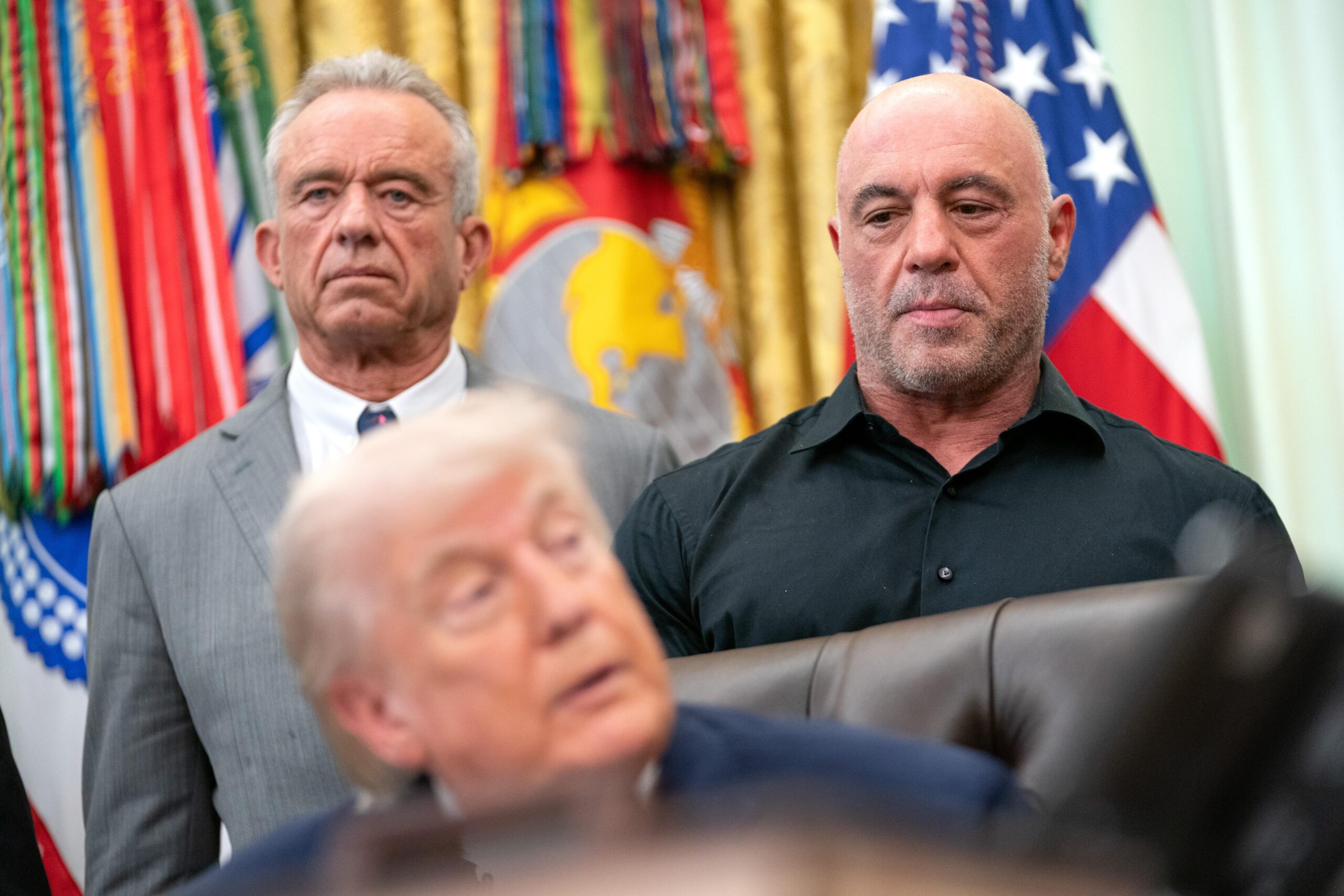
Shapiro, Rufo, and Rogan are three of the most important figures of the modern right. That they’ve all started sounding like comedy “hot dog men” of late suggests the right has a genuine problem on its hands.
Indeed, there are plenty of other examples.
Mark Levin, the Fox News and talk radio provocateur with Trump’s ear, unironically complains about “podcasters” who are “not about informing or educating,” but rather profiting off being “crazier” than their competitors. Rod Dreher, a right-wing writer who has long promoted a famously racist anti-immigration novel, has been expressing deep concern about rising bigotry on the young right. And even Dinesh D’Souza — a commentator who has spent literally decades spreading increasingly toxic, racially tinged conspiracies — is now warning that right-wing racism may prompt “mass desertions of blacks, Latinos and other minorities from the GOP.”
All of these men openly helped build the right-wing political culture that got us here. Now they’re all trying, desperately, to find the guy who did this.
The hot dog men and the right’s escalation ladder
I have a lot of sympathy for many of the substantive concerns these conservatives are raising. Conspiracist antisemitism really is bad; its rise on the right is genuinely dangerous. It is better for America to have Chris Rufo and Mark Levin warning about these things hypocritically than staying silent. Ben Shapiro has been particularly bold: He’s made a point of trying to critique the conspiratorial tendency in politics more broadly even as the Daily Wire’s traffic and YouTube views are in free fall.
But the fact that these men are all simultaneously donning hot dog suits points to something important: They appear to be losing influence over a right-wing machine they thought they could control. What happened?
Even before Trump, the right has been defined by its oppositional culture: specifically, a desire for its public figures to smash what they see as the “woke” or “PC” rules restricting right-wing expression. The base’s hunger for transgression creates an ever-growing desire for more and more radical stances from their leaders. The thrill comes from seeing boundaries broken, from hearing liberal shrieks of bigotry and ignoring them.
“It’s like drugs,” says Charlie Sykes, a conservative talk radio host turned Never Trumper. “Pot used to be enough, but now I need the purest meth I can find out there on the street.”
Being on the cutting edge, and building a growing young audience, requires pushing this process further and further.
If your critique of LGBT activism centers on its alleged threat to Christians’ religious freedom, you’ll soon get outflanked by someone claiming trans identity is a mental illness. If your commentary on race and sex discrimination ends at critiquing affirmative action, your audience will move to someone saying Blacks have low IQs and women are ruining the workplace. And eventually, when even these provocations start to feel tired for right-wing audiences, someone will go even further — suggesting one’s political opponents are pedophiles, communing with literal demons, or puppets of a Jewish conspiracy.
The hot dog men are right-wingers who saw this ratchet as tolerable or even helpful to a point, but are appalled at those willing to push it further — targeting groups they are members of or sympathetic toward, or abandoning ideas like formal colorblindness they’ve long defended.
There may be no brakes on the car
One question is: Can they do anything to stop it?
Probably not, says Pedro Gonzalez, a prominent MAGA commentator who abandoned Trump after the 2024 lies about Haitians eating pets.
“When your movement revolves around taboo-breaking and boundary-stepping, but then you decide there are some boundaries that are worth respecting, it’s a joke. It’s going to fail,” he says. “It’s going to collapse under its own weight.”
Gonzalez and Sykes represent the alternative to the hot dog men. They are conservatives who not only recognized that something has gone wrong, but took responsibility for their own role in fueling the dynamics that brought the right to its current nadir.
By saying this openly, they have alienated themselves from the movement they once called home. They look at the hot dog men, and see ghosts of themselves before that fateful choice.
They all described themselves as casualties of the right’s transgressive spirit. They thought there were lines that couldn’t be crossed, only for Trump and his friends to leap over them.
“I wasn’t the most self-aware guy in the world,” says Stuart Stevens, the lead strategist for Mitt Romney’s 2012 campaign. “Some of us were like the guys working for Bernie Madoff who thought they were actually beating the market.”
When speaking with these apostates, I heard a strikingly similar kind of story. Be they old-guard politicos like Stevens or younger internet natives like Gonzalez, they all described themselves as casualties of the right’s transgressive spirit. They thought there were lines that couldn’t be crossed, only for Trump and his friends to leap over them.
Whether the break happened during Trump’s original rise in 2016, or in response to some later outrage, they all realized that the moral boundaries they set for themselves did not and could not hold for the movement at large. The hot dog men, in their view, are flailing impotently against forces far larger than themselves.
“Shapiro I think has been more outspoken than most,” says Richard Hanania, a former extreme-right poster turned harsh GOP critic. “But…I think that there’s little he can do. This is an audience problem.”
This throws the future of the GOP into doubt
The rise of the hot dog men is not just a media story. It’s actually a portent about the future of the entire Republican Party — and thus the entire country.
Right now, the fractious conservative movement is being held together by one figure: Donald Trump. The president’s charismatic hold on the MAGA faithful allows him to define what the right stands for. His ousting of Massie and other enemies in recent primaries is the most recent evidence of his powers.
Yet even Trump has his limits. He has been unable to put the genie back in the bottle when it comes to Epstein conspiracy theories, which have been dogging his administration for over a year. His condemnation of Tucker Carlson during their post-Iran split has not ended the podcaster’s career. And, most recently, his handpicked candidate in Iowa’s gubernatorial race lost to a no-name MAHA insurgent.
It seems, in short, like the time of a Trump-enforced consensus inside the Republican Party is coming to an end. And a lot of what’s happening now, including the efforts by the hot dog men to cast out their extremist enemies, reflects a recognition of the party’s uncertain future.
“They’re trying to jockey for position in a post-Trump political world — or at least, a world where Trump is no longer a font of their own legitimacy,” says David Austin Walsh, a historian at the University of Virginia who studies the right.
So what does that world look like? The honest answer is that no one knows — and the hot dog men show us why.
Had they been able to successfully put the brakes on the GOP’s radicalization process, you could imagine a fairly predictable post-Trump transition: one in which the right’s policy and politics basically reflect their own priorities. But their efforts to purge radical voices are, as the apostates note, failing.
In some cases, the hot dog men’s efforts are even backfiring: The Daily Wire’s numbers have gotten bad enough that it has recently been forced to do mass layoffs.
In the absence of a kind of MAGA elite in waiting, a group of influential figures who can manage an orderly internal transition to a leader who reflects their values, it’s nearly impossible to say what comes next with any certainty.
“If you want to look at the future of the party, it’s not about the elected officials or the leaders — it’s about what’s going on in the media ecosystem that will shape the base,” Sykes says. “It won’t go back to normal until it’s no longer held hostage by the loudest, craziest, most extreme voices in the party.”
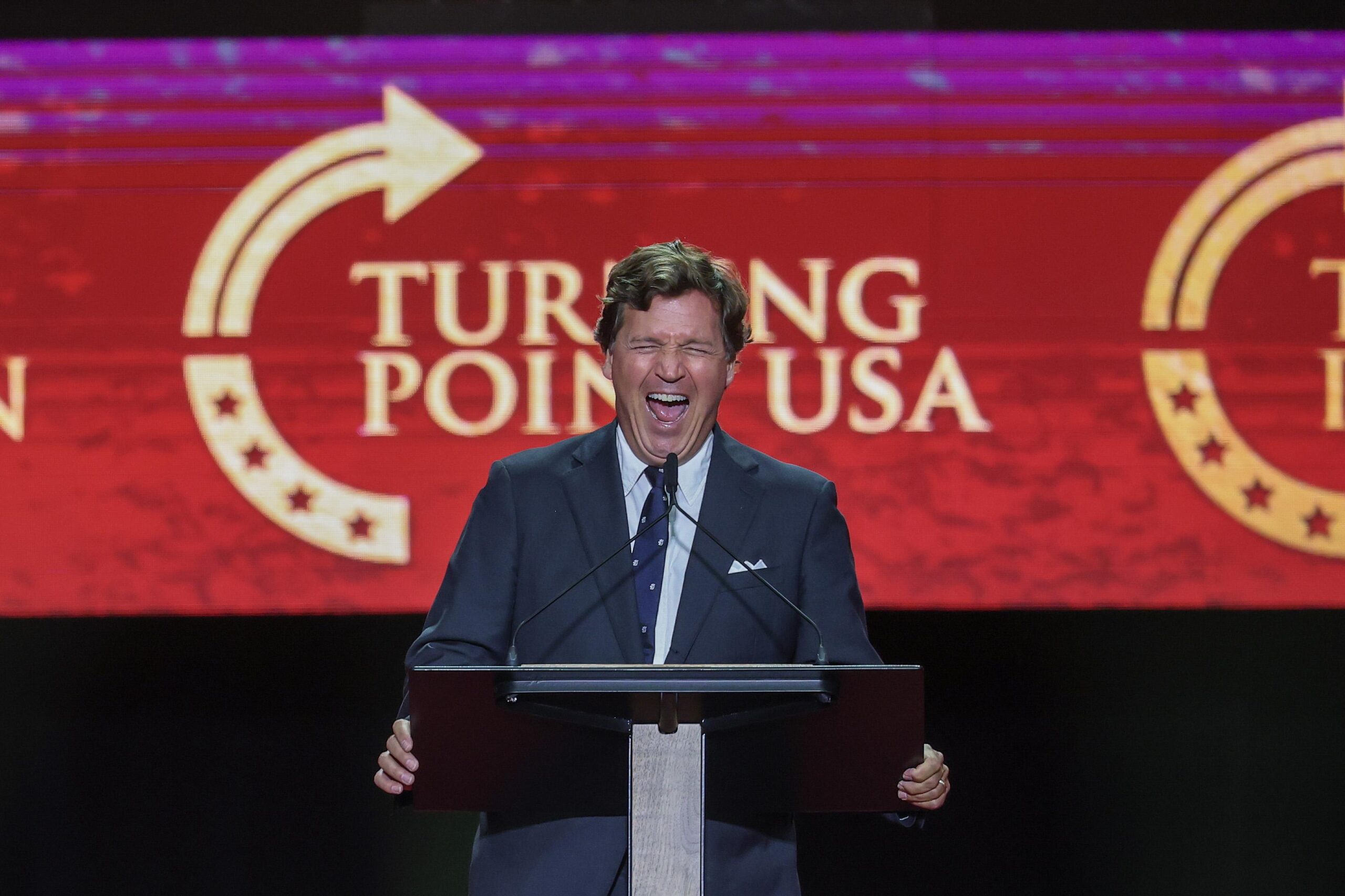
Others I spoke with floated a very different scenario: one in which the divisions between the various forces trying to seize the mantle create an opportunity for the old GOP establishment.
The premise here is that the GOP’s elected officials are, in large part, frustrated old-guard conservatives grudgingly going along with MAGA in order to stay relevant. While the podcaster cadres war with each other, this old guard might have an opening: field a candidate who captures the party’s less-online voters while still wearing a convincing-enough populist skinsuit. Marco Rubio’s recent 2028 polling surge makes this return-to-quasi-normalcy sound a little bit less outlandish than it might seem.
“I was surprised how much excitement there was when we started talking about Rubio and how much people came out of the woodwork to attack Vance,” Hanania says. “There’s an old GOP out there that is waiting for the opportunity.”
A third possibility is chaos: no charismatic individual, dominant ideology, nor singularly powerful faction emerges to take Trump’s place as the right’s unifying force. Neither JD Vance’s far-right nationalism, nor Rubio’s more old-school Reaganism, nor Robert F. Kennedy Jr.’s Make America Health Again movement, nor any of dozens of flavors of influencers and would-be leaders achieve a level of influence that allows them to corral the rest.
In this scenario, Republican Party politics becomes seemingly endless factional warfare. No single election, not even a White House victory, ends the conflict — one waged in primary elections, small magazine essays, and angry podcast monologues. This has basically been the Democratic Party since the Obama presidency; Hillary Clinton’s defeat created an ideological vacuum no one left-of-center vision has been able to completely fill. The right’s future could look similar.
“Even within the Republican Party, [MAGA]’s power is not what it once was — even a year ago,” Walsh says. “At the same time, I don’t know what else there is on the right right now.”
I can’t rank which of these possibilities is most likely. In fact, I’m confident this isn’t an exhaustive list. The right is so chaotic at present, its most influential non-Trump voices so unable to dictate terms, that it’s hard to predict with any certainty where it will go in 2028 — let alone in the years to come.
But one thing is for sure: Whatever ends up happening, there will be a significant number of people dissatisfied with what their movement becomes. And you will find hot dog men in their ranks.
Recent Comments