




“Elon Musk, Ryan Seacrest, and Chris Anderson of TED, consider yourself challenged,” Bill Gates bellowed from his garden. Beaming, he tugged on a candy cane-colored rope that dumped a barrel of icy cold water over his head. “You have 24 hours. Good luck.”
It was the scorching hot summer of 2014, and the ice bucket challenge — a viral social media trend to raise money for amyotrophic lateral sclerosis (ALS) research that involved soaking yourself with ice water and pressuring others to do the same — was in full swing. Gates had been challenged by Mark Zuckerberg, who’d been challenged by then-New Jersey Gov. Chris Christie, with whom Zuckerberg had appeared on Oprah a few years prior to announce a $100 million donation to Newark schools.
Key takeaways
- In the early 2010s, social media propelled a flurry of viral giving trends like the ice bucket challenge and #GivingTuesday. Generosity also became trendy for billionaires through the Giving Pledge.
- As the algorithm changed in the mid-2010s, the internet fractured and the sort of earnest, apolitical generosity that once thrived on the early web became rarer, and to some extent, passé.
- Billionaires and everyday Americans have turned cynical about giving, meaning that charities today receive fewer donations than they used to, and initiatives like the Giving Pledge have lost their luster.
- There’s no going back to social media’s hope-filled early years. But if viral nostalgia for the early 2010s is any indication, then the pendulum might finally be swinging back toward earnestness.
By the time Musk tweeted out a video of his kids drenching him with their own makeshift ice bucket gizmo a day after Gates, the challenge had already reached tens of millions of people worldwide. Among the participants were Jeff Bezos, Justin Bieber, David Lynch — and Donald Trump.
As if under an icy spell, the world came together in a way it never would again. Today, the ice bucket challenge and the litany of surreal, grainy videos it spawned are a time capsule of a bygone era, or at the very least, a bygone internet.
In the early 2010s, platforms like Facebook “actually had the potential to be this century’s agora, a marketplace of ideas,” said Asha Curran, who co-founded GivingTuesday, a philanthropic counterweight to Black Friday, in 2012. “The social media environment wasn’t this sort of existential threat to our mental health and our democracy and our isolation that it is now.”
But it wasn’t just a different era for social media. Back then, generosity was trendy for the one percent and 99 percent alike, and Bill Gates — alongside both his then-wife Melinda French Gates and Warren Buffett — was influencer number one. In 2010, the Gateses and Buffett launched the Giving Pledge, a campaign to convince the ultra-wealthy to donate at least half of their fortunes to charity. At the campaign’s peak, about one in seven American billionaires — including Musk, Zuckerberg, and a broad swath of the country’s rising tech billionaire class — pledged to donate at least half of their fortunes to charity. Together, they promised to usher in a new golden age of philanthropy.
They also aimed to inspire giving from Americans of more modest means, who flocked to viral clicktivism campaigns while sporting TOMS shoes and (PRODUCT)RED iPod nanos. The idea was seductive: You too could help save the world while making a show of your generosity.
Today’s billionaires appear more cynical than they used to be, and the rest of us seem to be, too. Gone are the days when tech overlords challenged one another to charity stunts rather than cage matches. If social media once seemed poised to save the world one hashtag at a time — think #Movember, #Kony2012, and #BringBackOurGirls — then today, it feels considerably more likely to tear us all apart.
For much of the past decade, fewer Americans have chosen to give to charity each year, while most billionaires appear to be giving away a diminishing share of their ballooning fortunes. The Giving Pledge, which held so much promise in 2010, has lost much of its steam and even come under direct attack from techno-cynics like Peter Thiel. The vibes have turned very bad.
It’s no wonder today’s youths yearn for the hopecore, the millennial optimism, of the early 2010s, that mediascape of messy buns, post-recession electropop, and sincere posting about causes everyone cared about for a week or two. The internet’s Earnest Era propelled a culture of giving even among billionaires, who shared a fear of missing out on the next hashtag cause. But today’s more fractured internet has kneecapped that positivity. To some degree, it made even the idea of trying to save the world cringe. The problem is not so much a giving crisis, as it is an attention crisis, one that’s been exacerbated by rising inequality and the decline of generosity as a collective cultural value, the kind of virtue worth signaling.
“For a while, you almost needed to pick a charity as part of your online persona,” said Scott Harrison, a nightclub promoter turned founder of Charity: Water, a celebrity darling back when “it was really cool” to give in the early 2010s. He has struggled to fundraise in recent years. “It’s not on trend. It’s not what people are doing. It phased out. The cycle ended.”
I wanna be a billionaire so freaking bad
2010 was a transformative year for generosity for two important reasons: The economy had passed through the very worst of the Great Recession, and for the very first time, more Americans were about to be on social media than off of it.
Surveys of young people in the early 2010s showed that they were stubbornly, discordantly optimistic despite graduating into underemployment.
One of those millennials was Mark Zuckerberg, who in 2010 was named Time’s person of the year at 26 years old for building a platform “fundamentally changing the way the Internet works and, more importantly, the way it feels.”
Social media made the world feel smaller. When a devastating 7.0 magnitude earthquake struck Haiti in January of that year, it became the first major live-tweeted natural disaster. Lindsay Lohan, Lady Gaga, and Haitian rapper Wyclef Jean were among those soliciting their followers for donations in the aftermath of the quake. Within a week, Jean’s own charity raised $2 million and the Red Cross raised $8 million. Celebrities released a “We Are the World” charity cover, and Americans ultimately gave about 15.3 percent more to international aid that year than they did the year prior.
People who donated told their friends about it — publicly, online — and they told their friends about it in turn, in a charitable daisy chain that thrived under newly digitized social pressures. If you told the internet about your good deed, you’d look cool. If you were the only one of your friends who didn’t, well, you’d look like a bit of a jerk, in a much more visible way than in the past.
Then, on June 16, 2010, news broke of Bill Gates, Melinda French Gates, and Warren Buffett’s plan to ask the nation’s billionaires to commit to giving away half of their fortunes. One week later, the Travie McCoy and Bruno Mars song “Billionaire” peaked at No. 4 on the Billboard Hot 100. It was an ode to getting rich not just to get rich, but to give it all away: “Not a single tummy around me would know what hungry was, eatin’ good, sleepin’ soundly.”
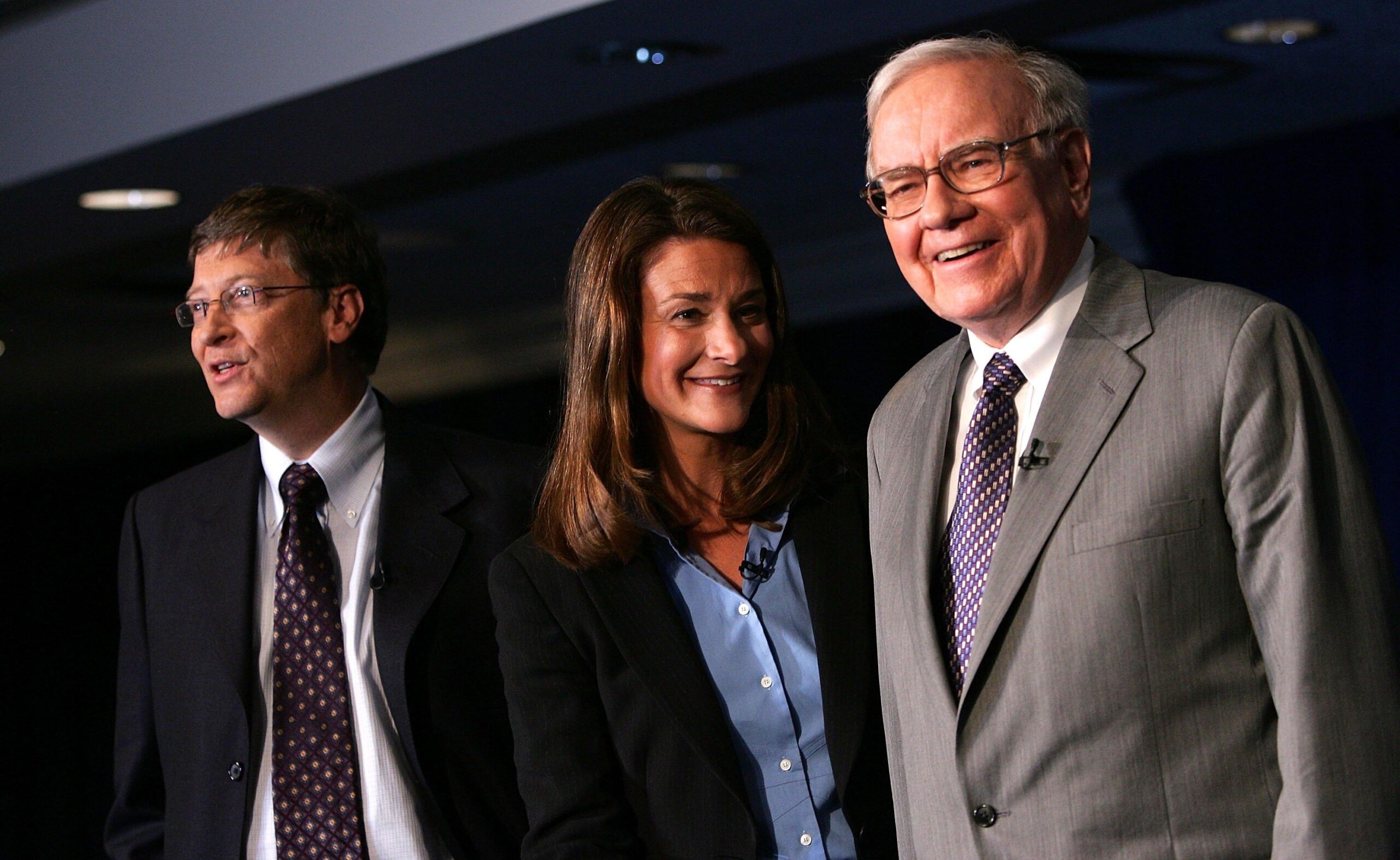
By 2014, the Giving Pledge had 130 signatories, amounting to one in seven of the country’s billionaires, the majority of whom shared their motivations for joining in public letters online.
“People signed it because it was the cool thing to do,” said Aaron Dorfman, CEO of the National Committee for Responsive Philanthropy, a watchdog that advocates for progressive practices in the philanthropic sector.
The Giving Pledge was perhaps the single biggest manifestation of philanthro-capitalism, or the idea that “rich people can save the world” by applying their business acumen to charitable causes, was “all the rage” at the time, he said. While the pledge was not legally binding — and came with few expectations — most signatories “honestly believed they were going to live up to the terms.”
While the rest of the world heaped praise on the Pledgers, Dorfman wrote a series of articles in the Huffington Post critiquing the Giving Pledge when it was first announced. “I remember thinking this is insane. Everybody thinks this is going to be the best thing since sliced bread and it’s just not,” he told me recently. At the time, he believed that the way billionaires gave was too slow and self-serving to actually make a dent in serious global problems. “There’s no way it can possibly make that much of a difference.”
How to #SaveTheWorld, one hashtag at a time
Zuckerberg wasn’t the only millennial to believe he could save the world.
Facebook, and other platforms like it, helped inspire a boom in viral kindness and giving campaigns in the early 2010s. While celebrities often acted as superspreaders — some, like Justin Bieber, signed a “Hollywood Pledge” modeled after the Giving Pledge in 2011— social media was not the influencer-dominated, algorithmized cesspool it is today.
When Curran helped launch GivingTuesday in 2012, “it immediately crossed what today we would think of as algorithmic bubbles,” she said. The White House blogged about it, and #GivingTuesday quickly became a top trending topic on Twitter. That first year, the hashtag raised at least $10 million for charity in 24 hours, a 53 percent spike from the year prior.
“The collective nature of social media and the collective nature of generosity were forming this perfect explosion.”
Asha Curran, GivingTuesday
“We were catching a wave,” Curran said. “The collective nature of social media and the collective nature of generosity were forming this perfect explosion.”
That same year, over 1 million men grew mustaches — and raised over $100 million — for Movember’s annual men’s health awareness campaign, driven in part by a PSA starring the mustachioed actor Nick Offerman. The charity Invisible Children went viral for its 30-minute YouTube video about the Ugandan warlord Joseph Kony, kindling the #Kony2012 craze, a campaign now chiefly remembered for being offensive and ineffective.
Few charities mastered social media quite as successfully as Charity: Water, which gained a huge following in part by flying tech entrepreneurs to Ethiopia and convincing celebrities to share their birthday fundraisers. Jada Pinkett Smith and Will Smith kicked off the trend in 2010, and a year later Justin Bieber asked his Beliebers to donate $17 each for his 17th birthday. By 2013, Charity: Water had raised over $100 million from thousands of people online, enough to build over 8,000 wells and other clean water projects.
“The beauty was the average birthday fundraiser brought in 10 of their friends and family,” Harrison said. “It almost had an implied virality, and it cost us nothing.”
By the time a majority of Americans had smartphones in 2013, the internet was being flooded with selfies and short video trends. (Rest in six seconds of peace, Vine.) The Norwegian Army danced to the Harlem Shake in the snow. And golfers were drenching themselves with cold water as a way to bring attention to their favorite charities online.
In July 2014, one of those golfers, a man named Chris Kennedy, poured a bucket of ice water on his head for the ALS Association, and then challenged his cousin, whose husband had the disease. She accepted, and the videos began pulsating through her social networks until they reached Pat Quinn and Pete Frates, both young ALS advocates.
From there, “it just continued to snowball,” said Brian Frederick, who the ALS Association brought on to help manage the trend. Over 17 million people participated that summer. “There was a period in August where for eight straight days, we were raising over $10 million a day.” The association had to reserve an entire office in its headquarters just to store all of the checks that people were sending in.
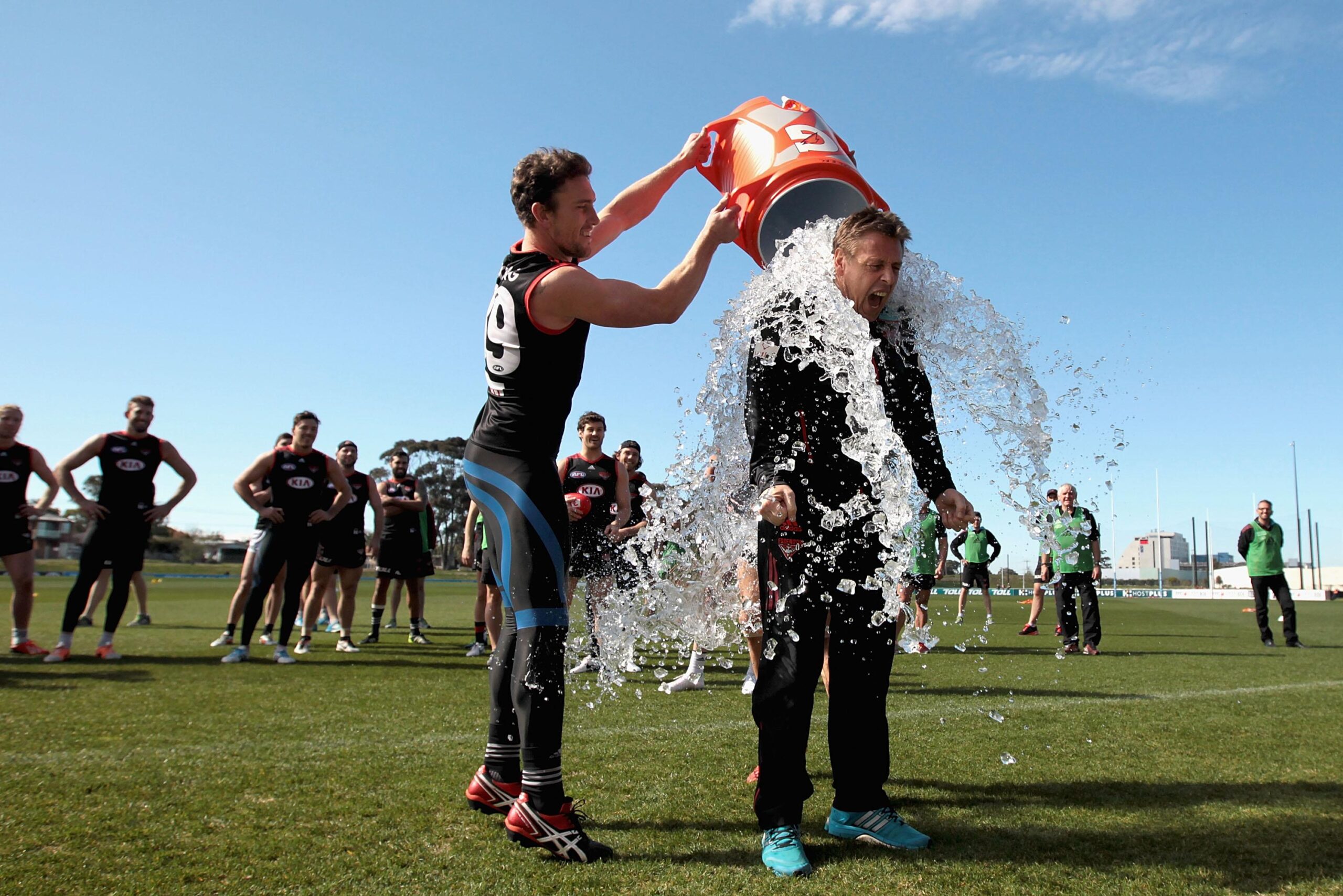
The association raised about $115 million in just eight weeks, money that helped fund 130 research projects in 12 different countries. But while social media moves at light speed, medical research is a bit slower. Only in recent years have ALS patients begun to see breakthroughs in treatment from that enormous infusion of funding for a rare disease that most Americans had never heard of before 2014. By the time their donations started to pay off, most of them had likely forgotten whatever they’d once known about the disease.
“It dramatically accelerated the fight against ALS. It led to new genes being discovered, new research collaborations, new treatments in the pipeline,” said Frederick, but for most people who soaked themselves with icy water that summer, “that was just a one-time thing for them. They’ll never know that they really did make a difference.”
When generosity became cringe
The ice bucket challenge was the last real do-gooder social media trend of its kind.
A week after it started coursing through the internet, a police officer in Ferguson, Missouri, shot and killed 18-year-old Michael Brown, drawing an outpouring of grief and outrage on social media. Both the #IceBucketChallenge and #IfTheyGunnedMeDown, the hashtag most associated with the protests that followed Brown’s killing, proliferated explosively and “almost simultaneously” across the internet, the writer Jia Tolentino noted at the time, yet they spread “entirely discreetly: twinned channels of wildfire blazing through quadrants of your attention that barely touch.”
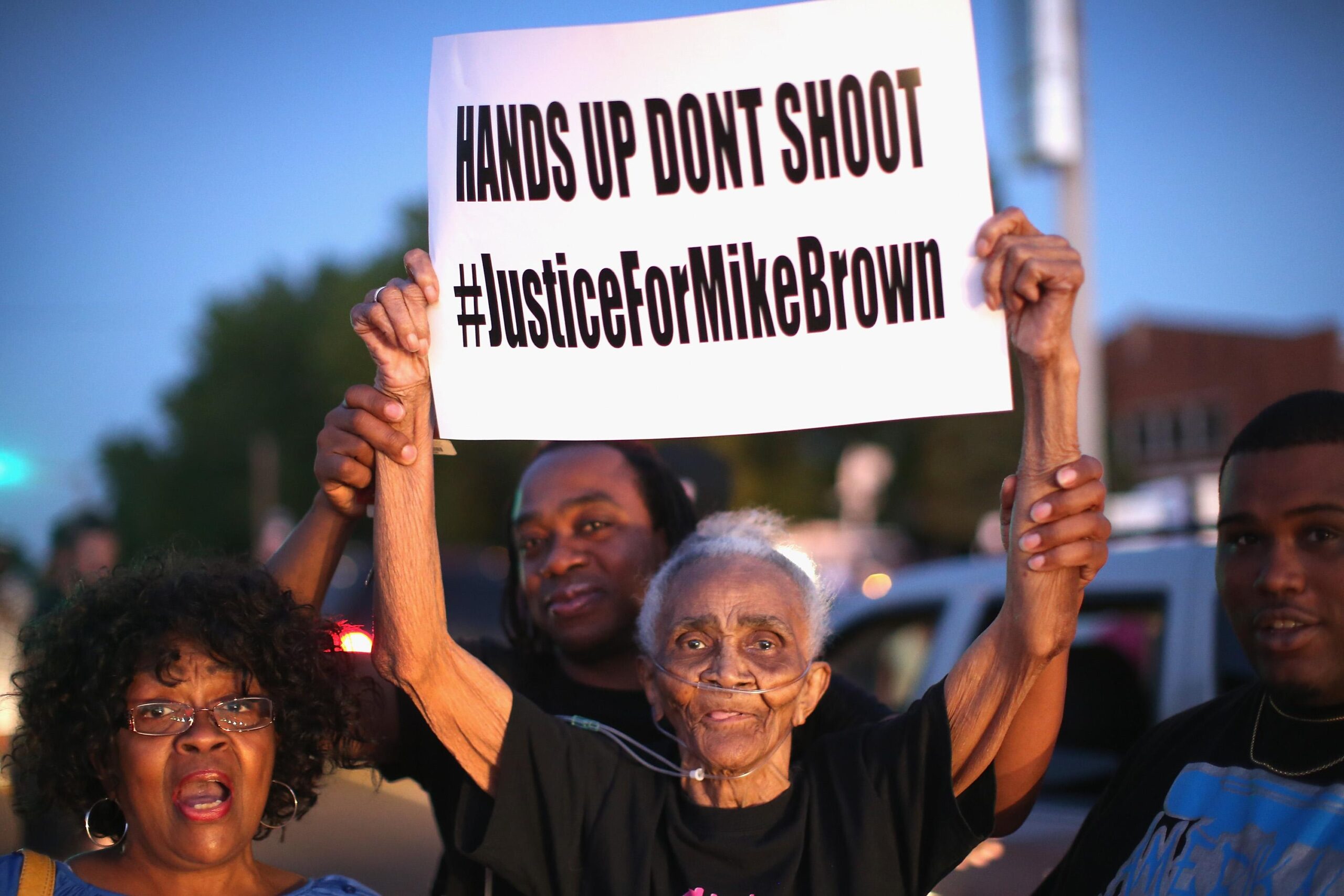
Cracks were beginning to show in an internet that would soon become irrevocably siloed, one where digital attention, which felt so boundless and empowering earlier that decade, would come to feel like a precious commodity, monetized and increasingly stretched thin. With the Ferguson protests, that shift coincided with a massive political awakening and major domestic unrest and anger. To some corners of the internet, the performance of mass apolitical acts of generosity began to feel like an irreconcilable distraction in a competition for finite attention.
As a result, the viral monoculture of the early 2010s fractured, giving way to an internet driven less by personal connections and more by hyper-targeted algorithms designed to keep you scrolling. “I don’t think people feel empowered by these tools anymore,” Ethan Zuckerman, a digital media scholar and professor at the University of Massachusetts at Amherst, told me. “They feel trapped by them. They feel like they want to escape these tools.”
The vibe shifted, and the internet’s new feeds rarely rewarded the kind of mass earnestness that drove engagement on early social media platforms.
“I wish that I had known that it was the last time so that I could have marked it in my mind,” Curran said. “I’m not sure that a Giving Tuesday could work if it were launched today.”
“I don’t think people feel empowered by these tools anymore. They feel trapped by them.”
Ethan Zuckerman, University of Massachusetts at Amherst
That’s not to say that people aren’t generous anymore. But they are significantly less likely to give to charity than they used to: Fewer than half of American households donate at all these days, down from 66 percent in 2000. Those who do give give an average of 1.2 percent of their income, down from nearly 2 percent in 2017.
America’s richest families have given more to charity in total dollars over the past decade — enough, in fact, to make up for the decline in everyday donors and then some. But as a percentage of their ballooning wealth, most billionaires — including those who signed the Giving Pledge — appear to be giving less to charity than they used to.
Rising inequality — and the belief that the wealthier should donate instead — explains part of this decline for everyday Americans, among other factors. But it also reflects a broader pattern in which Americans have largely moved away from performing their giving, or earnestness more broadly, at least online. It’s just not swaggy anymore; it doesn’t give you the insane aura that it used to.
“These platforms were really used as a force for good, and now are used as a force to sell more stuff.”
Scott Harrison, Charity: water
“It’s not in my feed. You’re not getting hit up for charities from your friends the same way you were,” Harrison said. “I can’t tell you the last celebrity that was in my feed asking me to give to their favorite charity, it’s been years. They are selling lipstick. They are selling protein powders. These platforms were really used as a force for good, and now are used as a force to sell more stuff.”
GivingTuesday is actually a much bigger movement today than it was in 2012, raising about $4 billion last year, but it’s no longer primarily a social media phenomenon. “Neighbor-to-neighbor generosity is more important than ever because that’s the way you escape the algorithmic bubble,” Curran said. “You almost have to get offline entirely.” Americans who do give online increasingly do so through ever more individualized channels like GoFundMe, which got its start in 2010, but has exploded in popularity in recent years. More than three-quarters of Americans say they believe that political polarization has made people more reluctant to give, and 60 percent said they’ve personally shied away from charitable activities that may involve people with opposing political views. In the absence of a shared civic culture, deeply siloed — and often distrusted — platforms like GoFundMe have become many Americans’ chosen way to give.
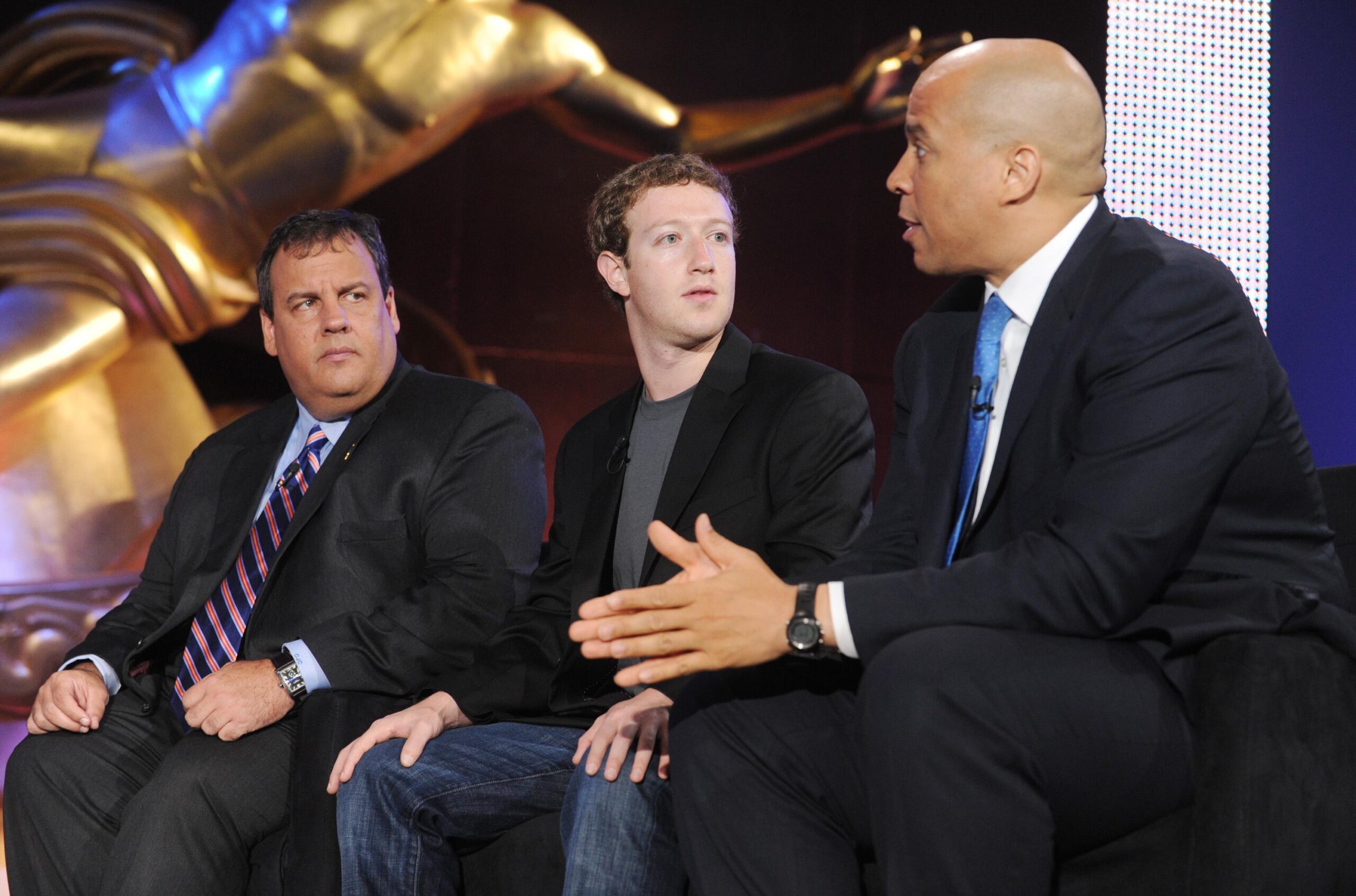
And where have the billionaires been? For the most part, accumulating wealth far faster than they gave it away. Zuckerberg, who once critiqued philanthropists for waiting until old age to fork up their fortunes, has seen his wealth increase by over 4,000 percent since signing the Giving Pledge, according to a report by the Institute for Policy Studies. That $100 million for Newark schools that he announced on Oprah to such fanfare in 2010? It’s now widely regarded as a colossal failure built on a foundation of philanthro-capitalist buzzwords instead of actual community needs. A few weeks after attending Donald Trump’s inauguration and appearing on Joe Rogan’s podcast, Zuckerberg’s philanthropic initiative announced that it would stop funding causes like education reform and social justice last year. While Zuckerberg gives much more in total charity today than he did 15 years ago, he gives far less as a percentage of his wealth. Zuckerberg pledged $100 million to Newark in 2010, equivalent to about 1.4 percent of his net worth at the time. Last year, he and his wife donated $608 million, but it amounted to just 0.3 percent of his now gargantuan fortune.
In recent years, a cadre of right-wing billionaires led by venture capitalist Peter Thiel has also begun to actively denigrate the Pledge for what they see as a left-wing bias, despite the fact that it has always been intentionally apolitical. “I’ve strongly discouraged people from signing it, and then I have gently encouraged them to unsign it,” Thiel, who accused the Pledge of being an “Epstein-adjacent, fake Boomer club,” told the New York Times. “I don’t know if the branding is outright negative, but it feels way less important for people to join,” he said, claiming that some Pledgers feel “blackmailed” to stay on the list once they sign.
As the rest of America has stratified and become more partisan, so too have the nation’s billionaires. And apolitical promises, like sheer generosity itself, just don’t hold the same allure that they used to.
“Peter Thiel used to be an outlier, but now many tech billionaires are coming together around this radical anti-social” worldview, said Chuck Collins, program director at the Institute for Policy Studies and author of Burned by Billionaires. “They’re opting out of the social institutions that the rest of us depend on.”
You say performative like it’s a bad thing
Craig Newmark is not like those other tech billionaires. The founder of Craigslist is not and has never been a billionaire at all, he says, despite what Forbes might have to say about it.
“I am a peasant at heart,” he told me, a few days after publishing an op-ed in the New York Times defending the Pledge against its partisan detractors. “My favorite luxury at my age is a walk-in shower with grab bars.”
Newmark is a new recruit, having only signed the Giving Pledge himself last December. He was already a prolific philanthropist, having donated hundreds of millions of dollars to military families, cybersecurity, pigeon rescue, and my alma mater. So why add his name now?
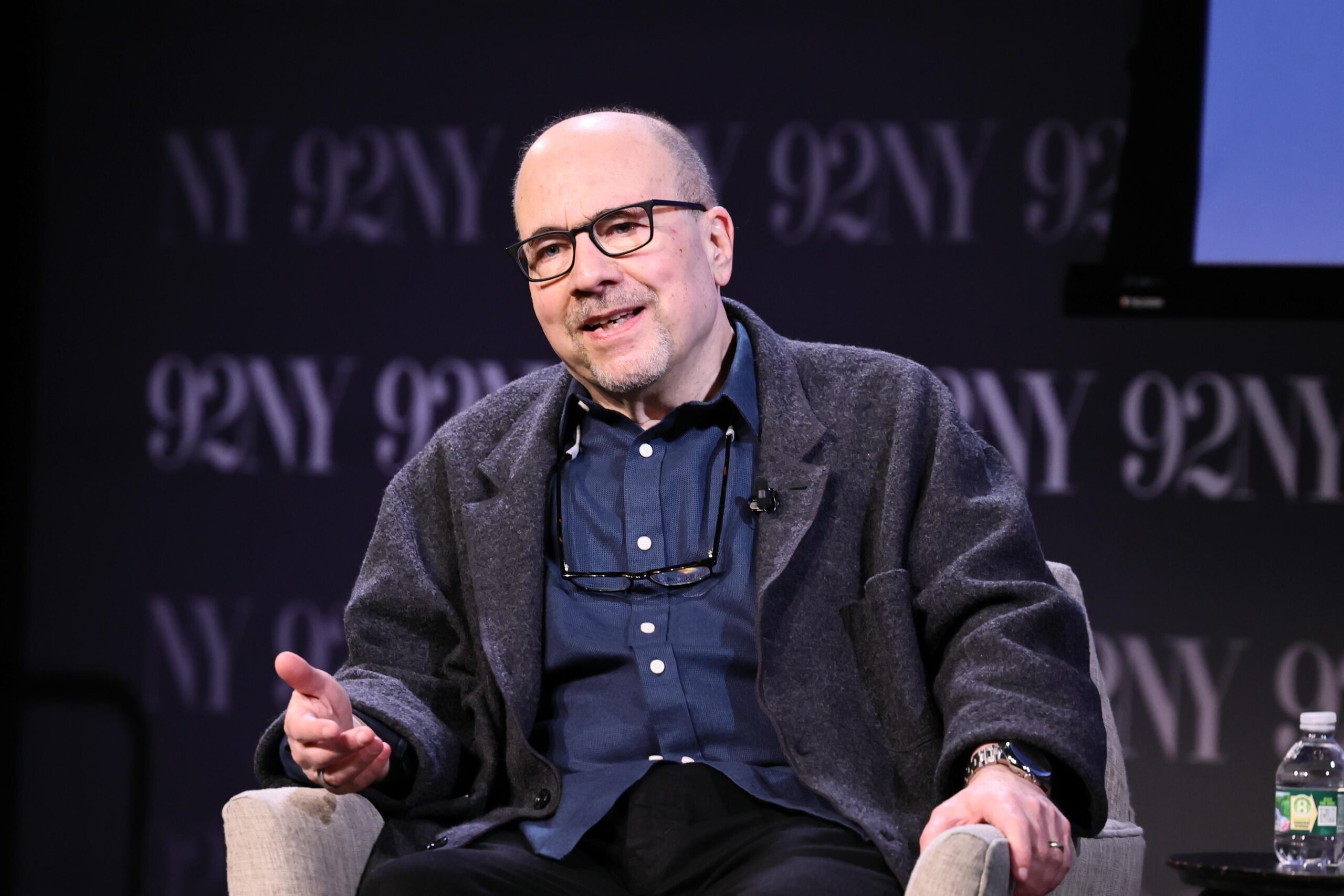
“It seemed to me that signing up for it would be funny,” he said, referring to the “absurd” idea that a “nerd patient zero” like himself could rub shoulders in an elite philanthropy club. “Funny is highly motivating for me. I know I’m not as funny as I think I am, but given the toxicity of our culture these days, anything funny is highly welcome.”
When I pressed him, Newmark conceded that signing the Pledge was also his way of “putting a stake in the ground.” Seeing other billionaires pull away from giving now is “disappointing,” he said, “because the world needs people who have too much money to pitch in” to help improve people’s lives at a time of vast inequality. “There are Americans who are going hungry,” he said, and “that kind of pisses me off.”
But primarily, he insists, he’s just trying to be funny. “We all need positive entertainment these days.”
And maybe that’s the point, because the Giving Pledge, like the ice bucket challenge and #Movember, was built on performance. Newmark is now engaging in that performance with the kind of wry, ironic humor befitting of today’s internet culture, rather than the gravitas and sincerity of the Pledge’s early years. But it was always, to some extent, a performative spectacle. While some signatories have turned out to be extraordinarily generous — MacKenzie Scott and Laura and John Arnold come to mind — there’s little evidence that the Pledge has accelerated their giving or made the ultra-wealthy more charitable as a cohort.
Having skimmed through dozens of early Pledger letters, I’ve found that many claimed to have already been well on their way to giving it all away prior to making a public commitment. “Until now, I have done this giving quietly,” wrote Oracle co-founder Larry Ellison in 2010. “So why am I going public now? Warren Buffett personally asked me to,” he wrote, for the purpose of “‘setting an example’ and ‘influencing others’ to give. I hope he’s right.”
The Pledge’s original 2010 signatories — including Gates and Zuckerberg — have donated about $206 billion as of last year, according to the Institute for Policy Studies, most of which went into their private foundations and DAFs, which slowly dole out grants to charity. The Arnolds are the only living original signatories to have given away enough to fulfil their Pledge, and of the 22 Pledgers who have died since 2010, only eight fulfilled their promise to give away at least half of their wealth during their respective lifetimes or in their wills. At the rate that Musk and Ellison are going — they’ve given away 0.06 percent and 0.03 percent of their wealth, respectively, according to Forbes — it seems unlikely that today’s living Pledgers will fare much better. And they’re in good company. Four in five of the wealthiest 400 Americans have given away less than 5 percent of their fortunes as of last year, most under 1 percent.
Likewise, only about one-fifth of those who participated in the ice bucket challenge actually donated to the fight against ALS. The one in five who did donate gave about $220 million to ALS worldwide, and $115 million to the ALS Association, which raised about $2.8 million in the same period the year prior. While there was a genuine desire to help people through the trend, at the same time, Frederick said, the majority of people were “just doing what their friends were doing.”
They were virtue signaling, but that’s not such a bad thing — philanthropy, after all, can do good no matter the intention behind the giving. An internet where people feel the need to do charity stunts for clout en masse is still better than one that rewards you for trying to hammer yourself a better jawline. On the rare occasion that earnestness does go viral today, as it did during the Artemis II launch or after Alysa Liu’s ebullient free skate routine, “it just makes me long for a time when communal awe was more prevalent than it is now,” said Curran. But while today’s social media tends to reinforce the idea that Americans “hopelessly hate each other,” she said, “if you get down to the community level, you actually see all these really beautiful things happening.”
Last year, a group of undergraduates at the University of South Carolina decided to revive the ice bucket challenge as a fundraiser for youth mental health. They hoped to raise $100, maybe $200, Alison Malmon, founder and executive director of the charity Active Minds, told me.
Most of the students were barely out of preschool when the first ice bucket challenge went viral. But suddenly, college kids, beauty influencers, and celebrities were once again racking up views by drenching themselves in frigid water online. The revived ice bucket challenge raised over $500,000 for Active Minds. It never came close to its predecessor’s stratospheric levels of popularity — things just don’t go viral like they used to anymore — but it did, for a moment, revive a sense of earnest do-gooderism that, for over a decade, felt increasingly relegated to the internet’s far fringes.
The phrase millennial optimism was born a few months later, driven by nostalgia for a bygone and vaguely naive internet culture that most young adults today are old enough to remember, but young enough to romanticize. So far, there’s no indication that Gen Z’s rediscovery of indie sleaze portends a sustained, serious resurgence of viral earnestness culture, from billionaires or from the rest of us. But as MGMT would put it, maybe now it really is time to pretend.
Recent Comments