




If you’re looking for insights into why Democrats lost in 2024, you won’t find many in the DNC’s disavowed “autopsy,” which was released after much pressure Thursday. The incomplete and error-ridden report, written by a friend of DNC chair Ken Martin, offers various takes on the election but little convincing evidence, and avoids many contentious issues entirely, like immigration and Israel.
There haven’t really been any dramatic attempts by Democrats to change their party brand going forward, either. There’s been no policy platform like Newt Gingrich’s 1994 “Contract with America” to guide candidates around the country. Disparate primary battles haven’t congealed into a nationwide movement like the 2010 Tea Party. Nor has there been a high-profile push from party leaders for Democrats to repudiate Joe Biden’s unpopular record, and mostly the same people are in charge.
But behind closed doors, among Democratic elites, a reckoning has indeed taken place — and a quiet consensus about at least part of the path forward has emerged.
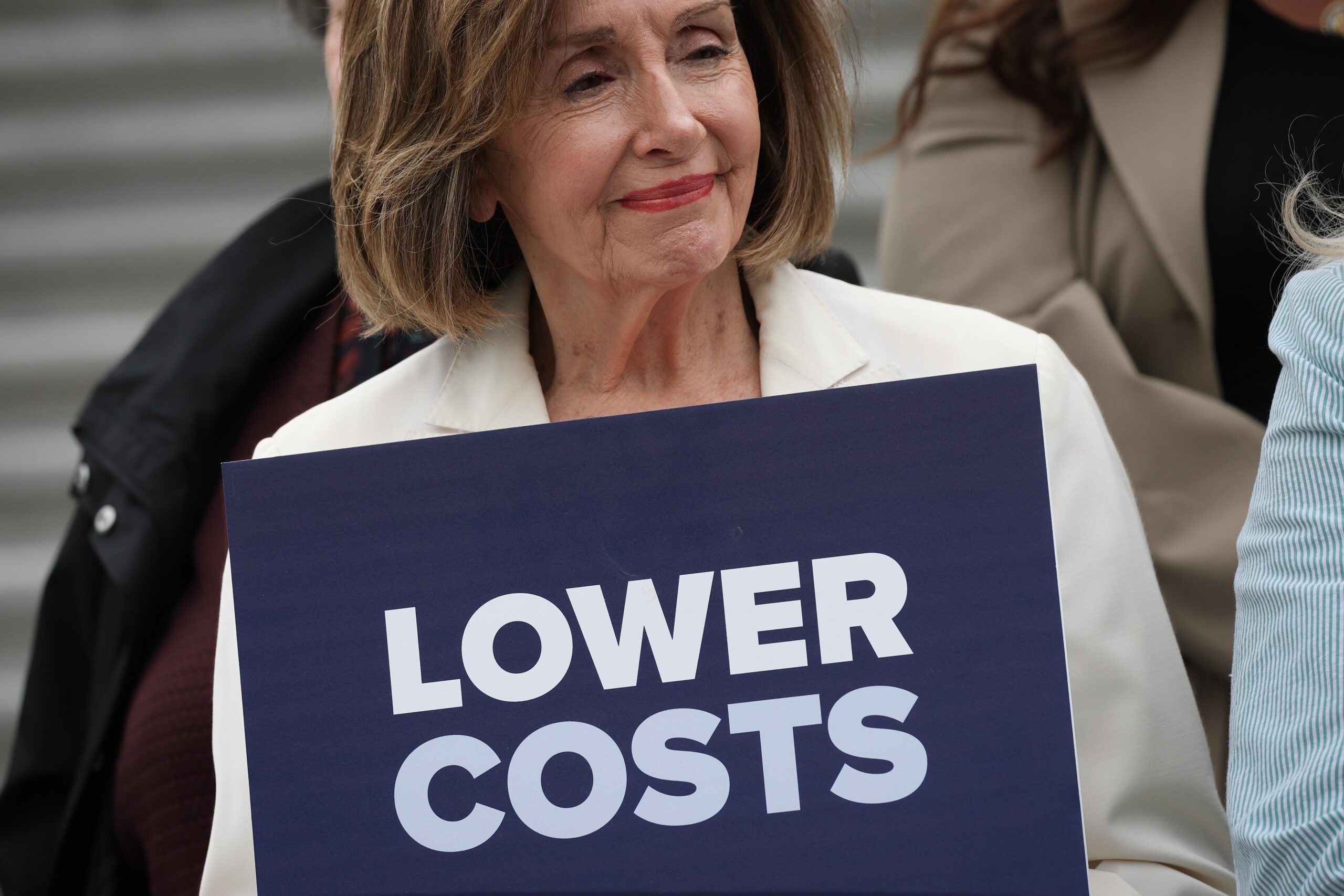
The most obvious midterm plan is a laser focus on affordability and on criticizing President Donald Trump, evident in campaigns across the country. Leftists like Zohran Mamdani and party leaders like Hakeem Jeffries agree that talking about cost-of-living issues is their best approach, even if they have different variations on that message and the policies they’re recommending.
Then, more subtly, Democrats have also recalibrated on various other issues where many in the party believe they’d gotten too far out of sync with mainstream voters over the past decade — most notably, border security, crime, climate change, and identity issues.
But the recalibration typically hasn’t involved messy scenes where Democrats throw these constituencies under the bus. Instead, it’s played out with candidates quietly backing away from or downplaying stances now viewed as excessively reminiscent of the “Peak Woke” years — in hopes those issues are simply less relevant.
Mamdani, for example, repudiated his old rhetoric calling police “racist” during his mayoral race. In Texas, James Talarico responded to an old clip touting his prior campaign’s “non-meat” policy with a picture of him chowing on a turkey leg. And in Virginia last year, Abigail Spanberger stayed vague regarding school policies on trans students, bathrooms, and sports, evading her opponent’s efforts to pin her down on the topic.
This more restrained approach to changing the party’s image may well pay off in the midterms, which are typically more of a referendum on the incumbent president. But skeptics question whether more should be done to improve Democrats’ standing, both for the midterms and subsequent elections.
“There’s nothing that has really been done to forcefully move away from what everyone broadly agrees to have been a series of pretty catastrophic mistakes,” Lakshya Jain, pollster and data director for the liberal publication The Argument, told me. “Instead, the idea is, let’s let the shifting issue environment save us.”
Democrats’ quiet consensus
Immediately after Kamala Harris lost in 2024, a heated debate erupted over whether she and the party had generally moved too far left on key issues and gotten out of step with what mainstream voters believed.
A year and a half later, my conversations with people in and around Democratic Party politics suggest there’s a widespread agreement that they had.
“I’ve been on the conference circuit basically since the beginning of March, and you can just sense it,” Tré Easton, a vice president of the center-left Searchlight Institute think tank, told me. “People — not just moderates, but normie Democrats — are understanding that the thing we were doing in 2024, which led to us losing the popular vote for the first time in 20 years, we can’t do that again.”
Indeed, among party elites, there’s a widespread belief that Democrats need to be more solicitous of the median voter — rather than the progressive activists and nonprofit groups who were so influential in the party over the past decade.
These beliefs include:
- that the public wants a secure border and dislikes both the chaos of the Biden years, and the brutal tactics of the Trump years;
- that the public badly wants low energy prices — so climate change should get less emphasis in campaign messaging;
- and that, culturally, progressives got out of step with the median voter during the “Great Awokening” years on issues related to race, gender, and sexuality.
“The big lesson which we’ve had to relearn is not to get caught in these culture wars,” Elaine Kamarck, a Brookings Institution senior fellow who’s long been deeply involved in Democratic party politics, told me. “But I think there’s a lot more discipline this time.”
But there’s been no bitter break with progressives — rather, these changes have unfolded as more of a “vibe shift,” as Democratic elites and politicians move to a new consensus about how to act.
Activist groups have been relatively muted as Democrats have changed their rhetoric on these issues. Intense factional controversy is fiercest on the topic of Israel, where the party has been moving to the left, and so has the median voter. How far to go when it comes to reining in ICE — or abolishing it entirely — is a matter of dispute. But while there are some substantive disagreements between Democrats on various social and economic issues, there hasn’t been anything like a party civil war.
Furthermore, despite their anti-establishment mood, most Democratic base voters seem to be on board with some concessions to public opinion after 2024. A New York Times/Siena poll this month asked Democrats and Democratic-leaning independents whether the party should move to the center or the left to win in 2028. Fifty-two percent said move to the center, compared to only 25 percent who wanted to move to the left. (Eighteen percent said to stay where they are.)
But have they done enough?
While there’s broad agreement that the party is well-positioned for the midterms due to Trump’s sinking approval numbers, skeptics from the moderate wing question how much has really changed — and whether this consensus can really survive in the longer term.
“The Biden administration said they were going to put racial equity at the center of everything the federal government does,” said Matt Yglesias, a former Vox colleague who has vocally argued that the Democratic Party should moderate on the issues. “I haven’t heard anything like that from a Democrat in years. But is that just that they’ve learned to keep this stuff quiet? Or have they actually changed their views on things?”
Easton of the Searchlight Institute also thought more needed to be done. “The Democratic Party does not have an energy policy or an immigration policy right now, and that is not sustainable,” he said. “In part, that’s because we don’t have a national leader to dictate what that is. But also, we still have the groups who are trying to hold onto the policy consensus that held for the past decade or so.”
The reality, though, is that wrenching intra-party debate is painful and risky, and Democrats are temperamentally inclined to seek consensus behind closed doors instead of having it out in public.
And one problem for the moderates advocating for further moderation is that, if Democrats romp in 2026, the current cautious approach will be vindicated.
“To me, the risk is reaching the conclusion that they’ve done enough,” Yglesias said.
For instance, in the Senate, candidates like Talarico are potentially putting certain red states in play amidst a terrible environment for Republicans this year. But the geography of the Senate is quite challenging for Democrats over the longer term, because, Yglesias argued, of the party’s “cultural positioning is outside the Overton Window” in many red states — that is, they’re still too far left for those states’ voters.
Then there’s the presidency. “I don’t think a single Democrat or swing voter can tell you what [Michigan senator and potential 2028 presidential candidate] Elissa Slotkin is different from Joe Biden on,” Jain said. “I don’t think there’s a plan to address that. I do think that will decrease the marginal odds of winning.”
But, Jain also told me, he thought that if Trump’s approval remains this low in 2028, Democrats’ odds will be quite good. “There’s no precedent for the incumbent presidential party winning an election when their president is at 37 percent. So even if the Democrats don’t do anything — it might be enough to win.”
Recent Comments