




It’s Earth Week, and these days, it’s become hard to know just what to do with this holiday. Is it a reminder to start composting, ditch fast fashion, or donate to climate causes? Or does nothing we do as individuals really matter, and it’s on governments and corporations alone to fix our climate and ecological crises?
The latter idea — that our own individual actions won’t help to heal the planet — has become almost gospel in the modern environmental movement. And it’s largely right. But there are a few actions that individuals can take that actually do make a substantial difference in turning our current environmental trajectory around. And some of the most impactful ones might not be what you’d expect.
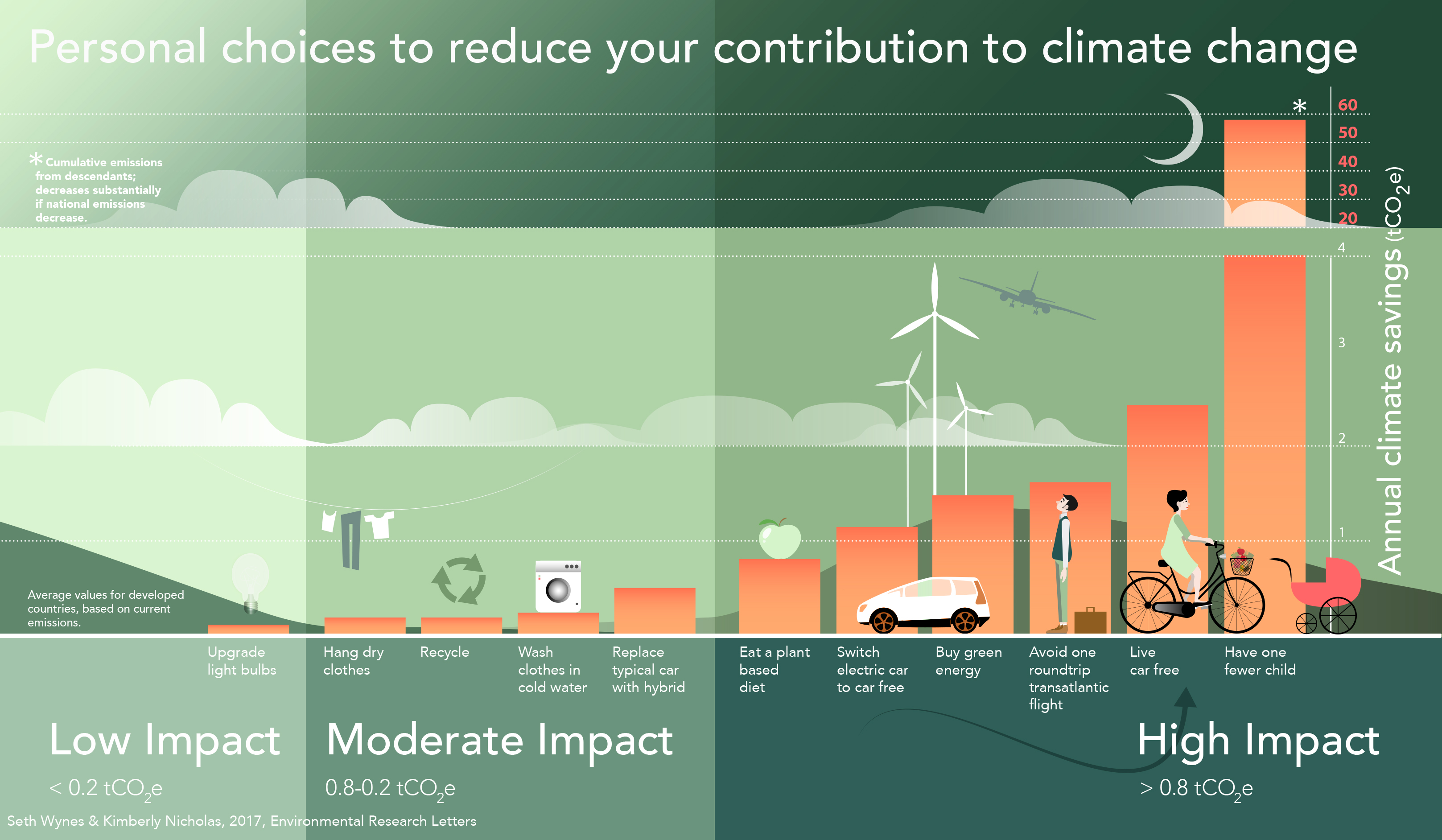
The environmental nonprofit Project Drawdown analyzed the top 20 actions that households can take to minimize their carbon footprint. It found that reducing food waste and eating a “plant-rich” diet — one that’s lower in meat and dairy — came out tied with each other for the No. 1 spot of most impactful changes. Putting solar panels on your roof ranked third, lagging far behind. (A number of other environmental analyses have put plant-rich diets as top contenders for environmental lifestyle changes, too.)
This story was first featured in the Future Perfect newsletter.
Sign up here to explore the big, complicated problems the world faces and the most efficient ways to solve them. Sent twice a week.
And fortunately, food selection is a low-overhead choice we get to make many times each day, which makes it more flexible than other high-impact actions, like buying an electric vehicle or making energy-efficient home renovations.
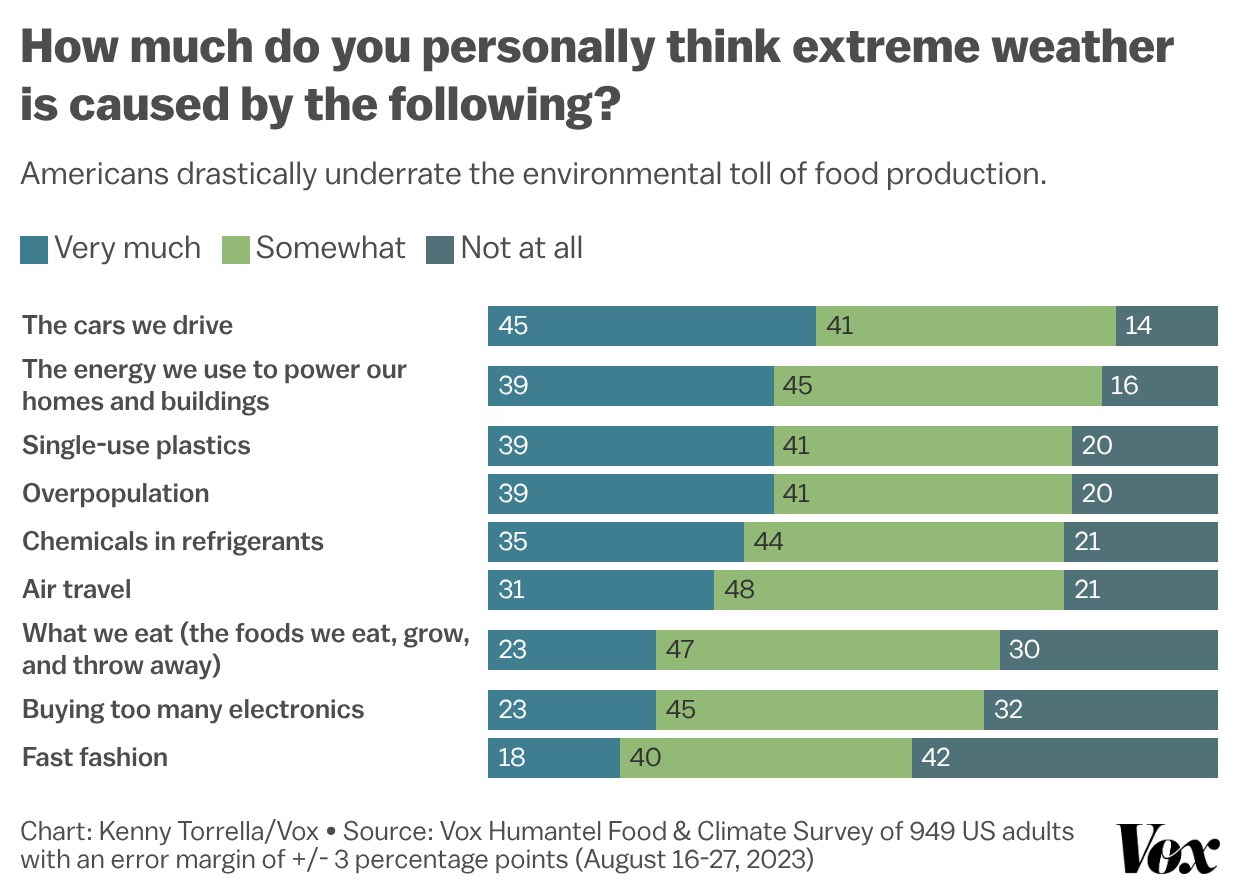
Yet surveys show that people greatly underestimate meat and dairy’s enormous impact on the environment — and not just its fueling of climate change, but also its massive contribution to deforestation, water pollution, and other problems.
It’s understandable why. As I wrote a few years ago, “a power plant emitting plumes of black smoke screams pollution, while a pasture of cattle, chickens, or pigs along the highway looks natural and quaint — even eco-friendly.” So here are eight charts that break down how truly massive an impact our food choices have when you add them all up.
First, meat and dairy production are really inefficient ways to produce food.
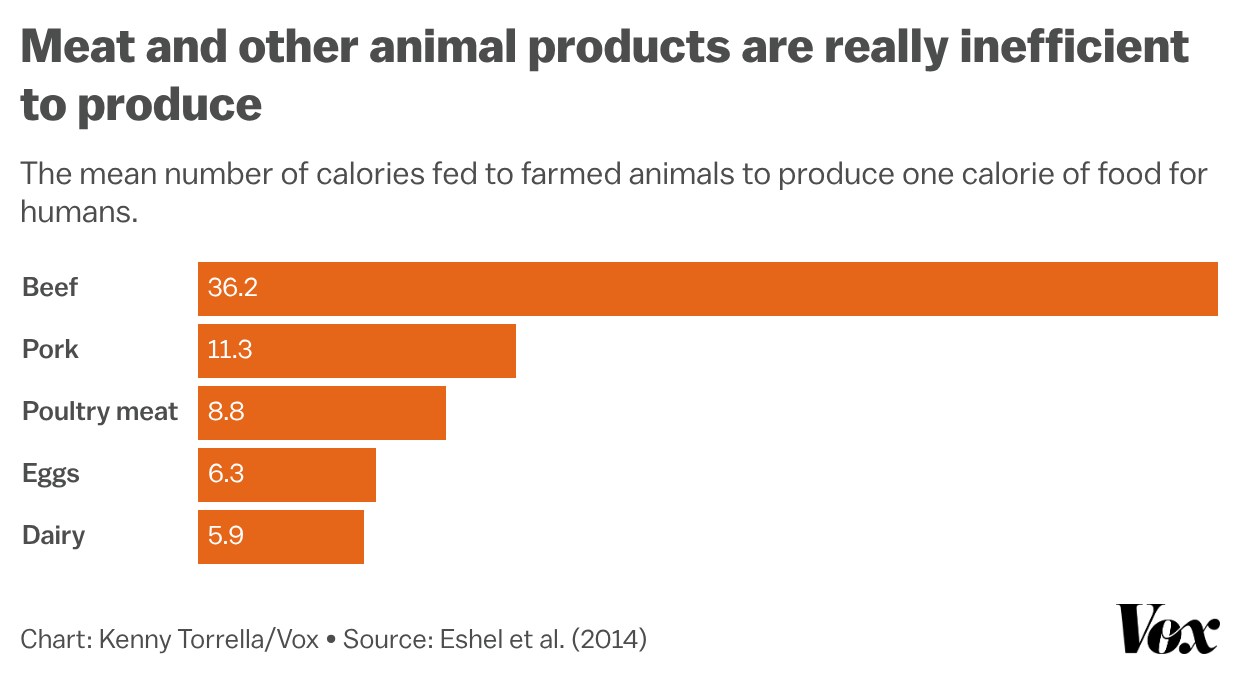
Meat companies have to feed animals a lot of calories to produce just one calorie of edible meat, dairy, or eggs. Bruce Friedrich, president of the Good Food Institute and author of the book Meat, likens this efficiency to tossing eight plates of pasta into the trash for every one plate we eat (in the case of chicken — and it’s far higher for beef).
In this way, meat production itself is a form of food waste.
To grow all these crops, like corn and soy — and graze cattle and sheep — farmers and meat companies have turned much of planet Earth into one big animal farm, occupying more than one-third of habitable land. It’s the top cause of global deforestation and habitat loss, and thus a leading threat to wildlife.
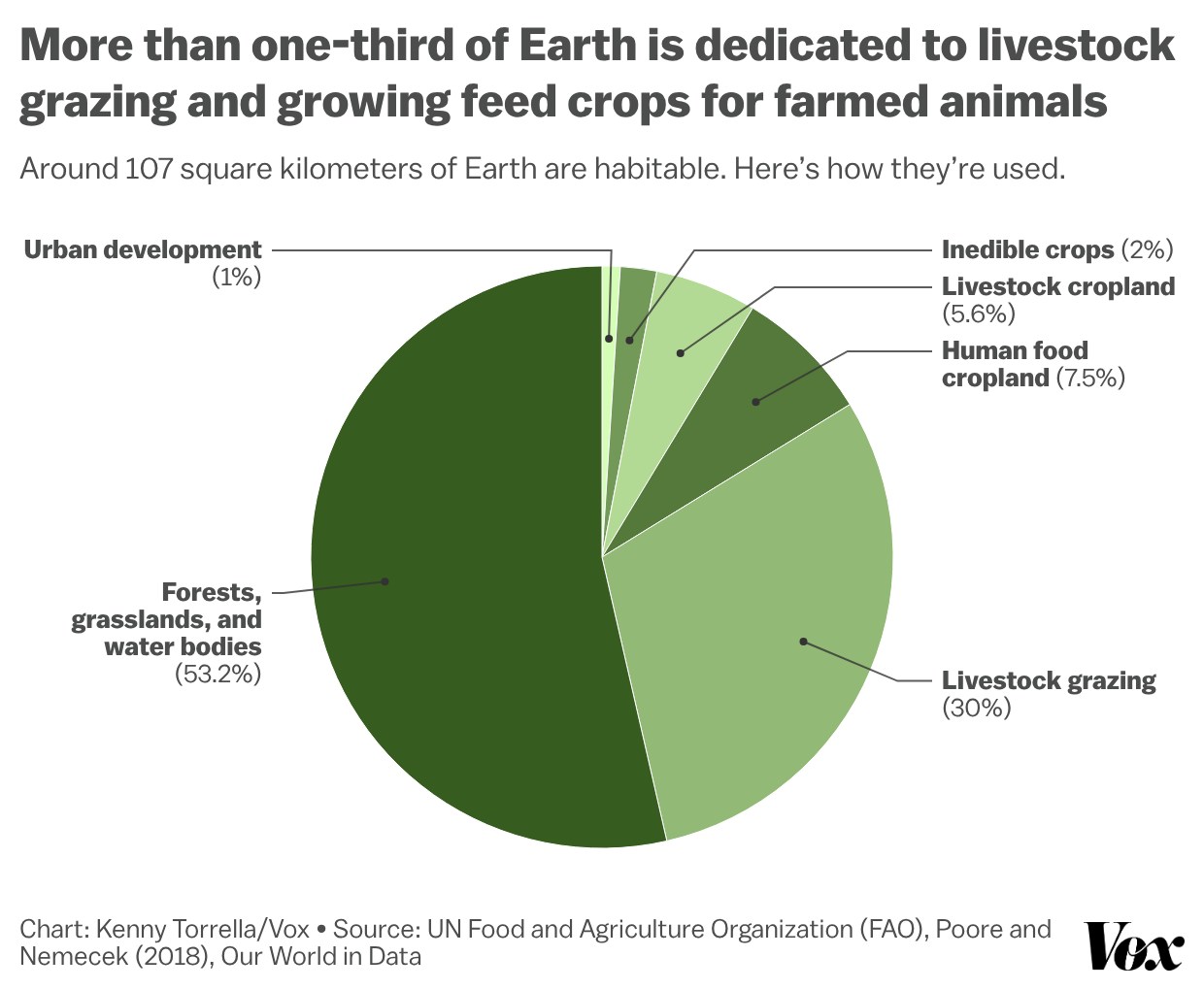
It uses up even more land in the continental US: 41 percent.
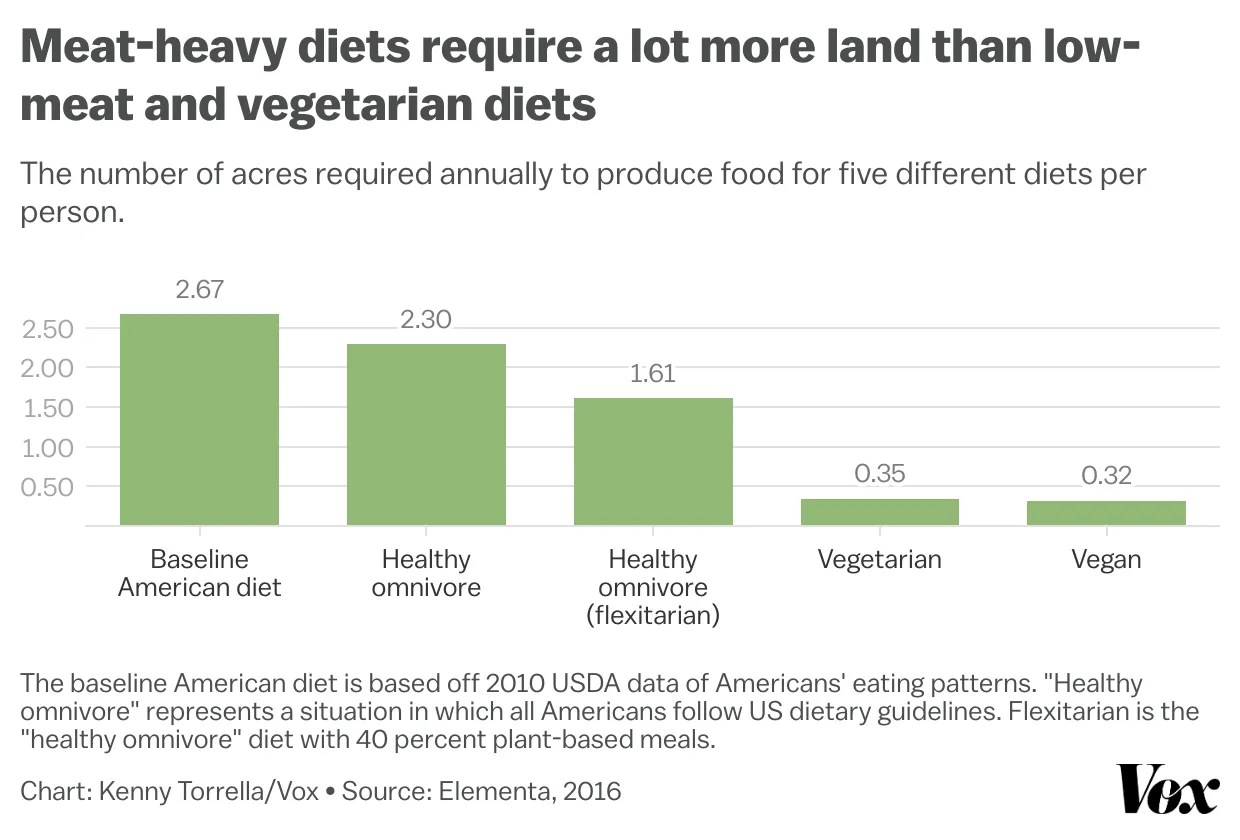
To look at it another way, here’s the amount of land required to produce various diets:
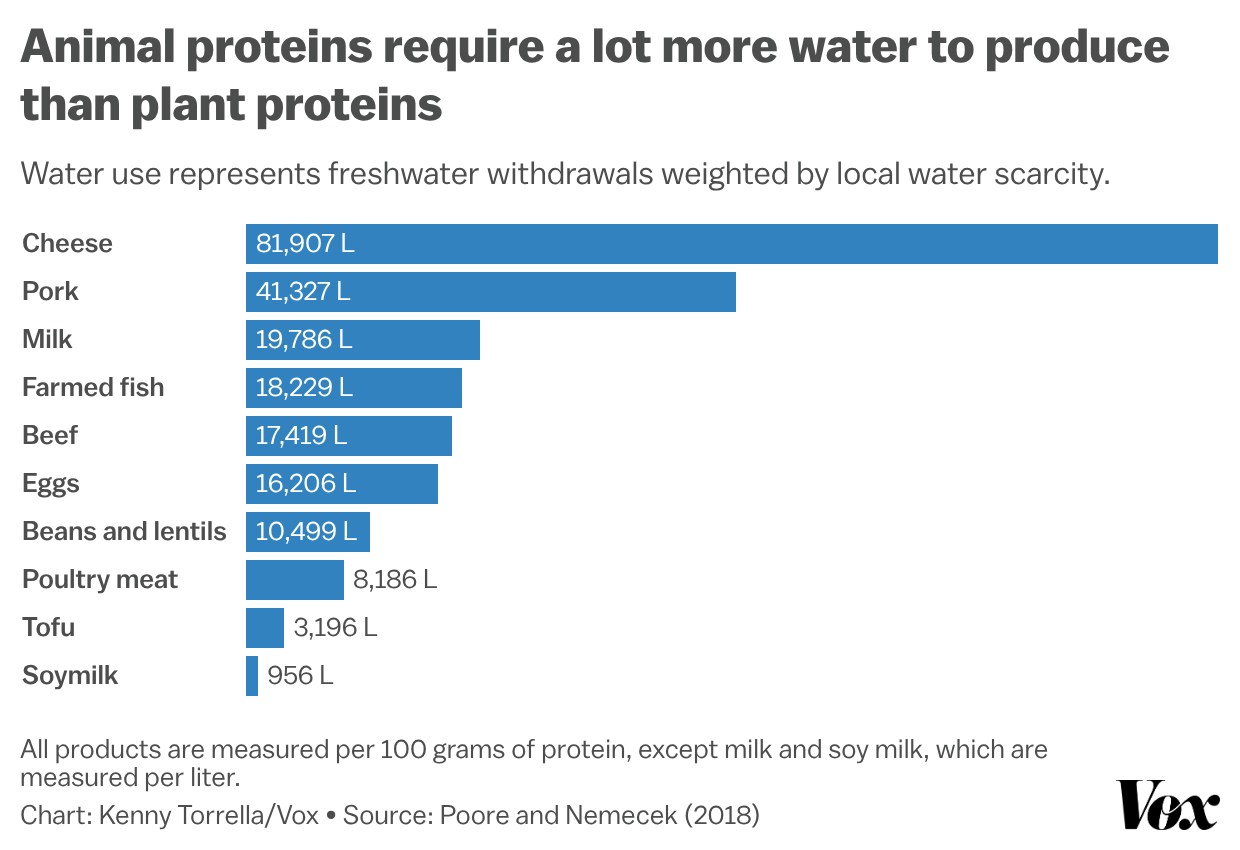
But land isn’t the only essential resource that animal agriculture gobbles up. It’s also the largest user of freshwater.
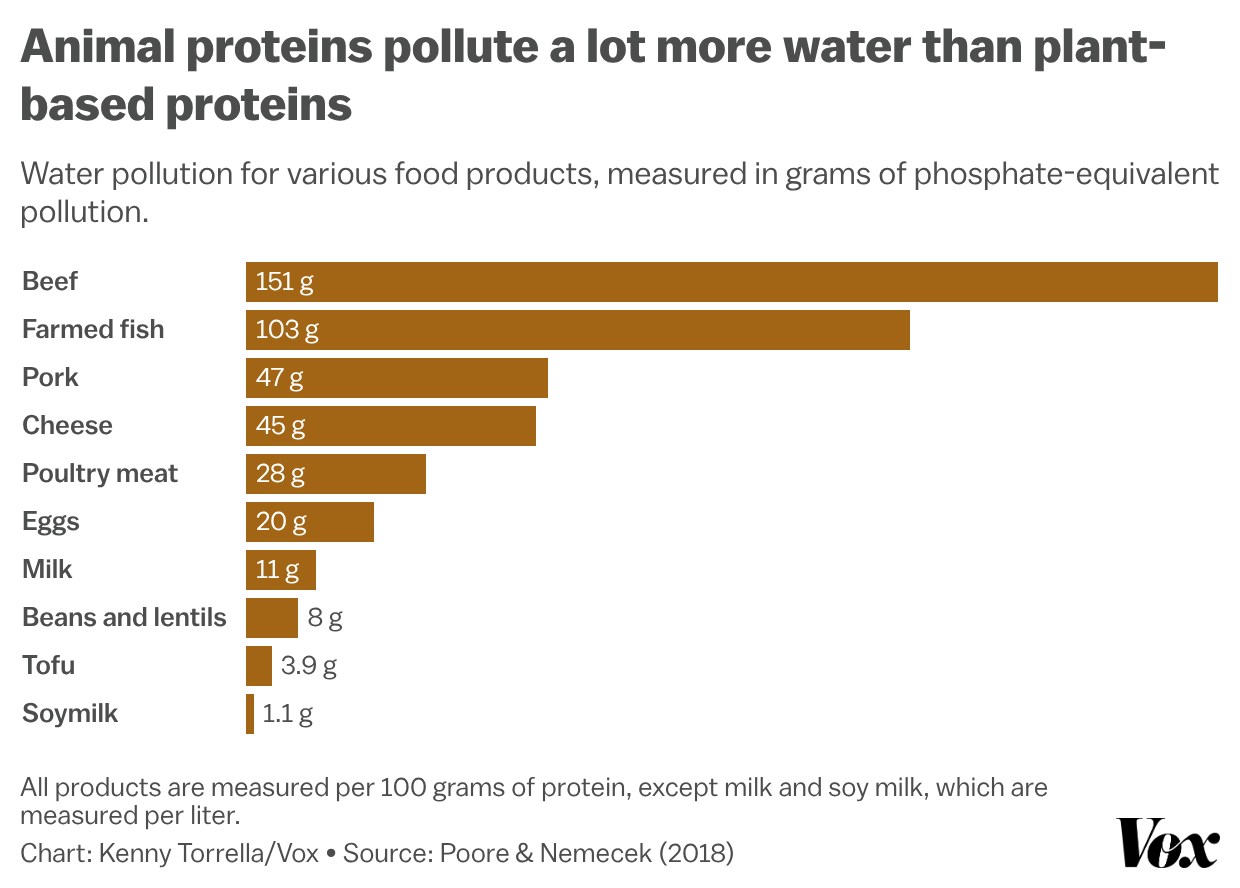
Animal agriculture doesn’t just use up a lot of water; it also heavily pollutes waterways like rivers and streams. In the US, it’s arguably the biggest source of water pollution. The pollution primarily stems from two sources: manure from the world’s hundreds of billions of farmed animals, and the fertilizer used to grow their feed crops.
Finally, there’s climate change.
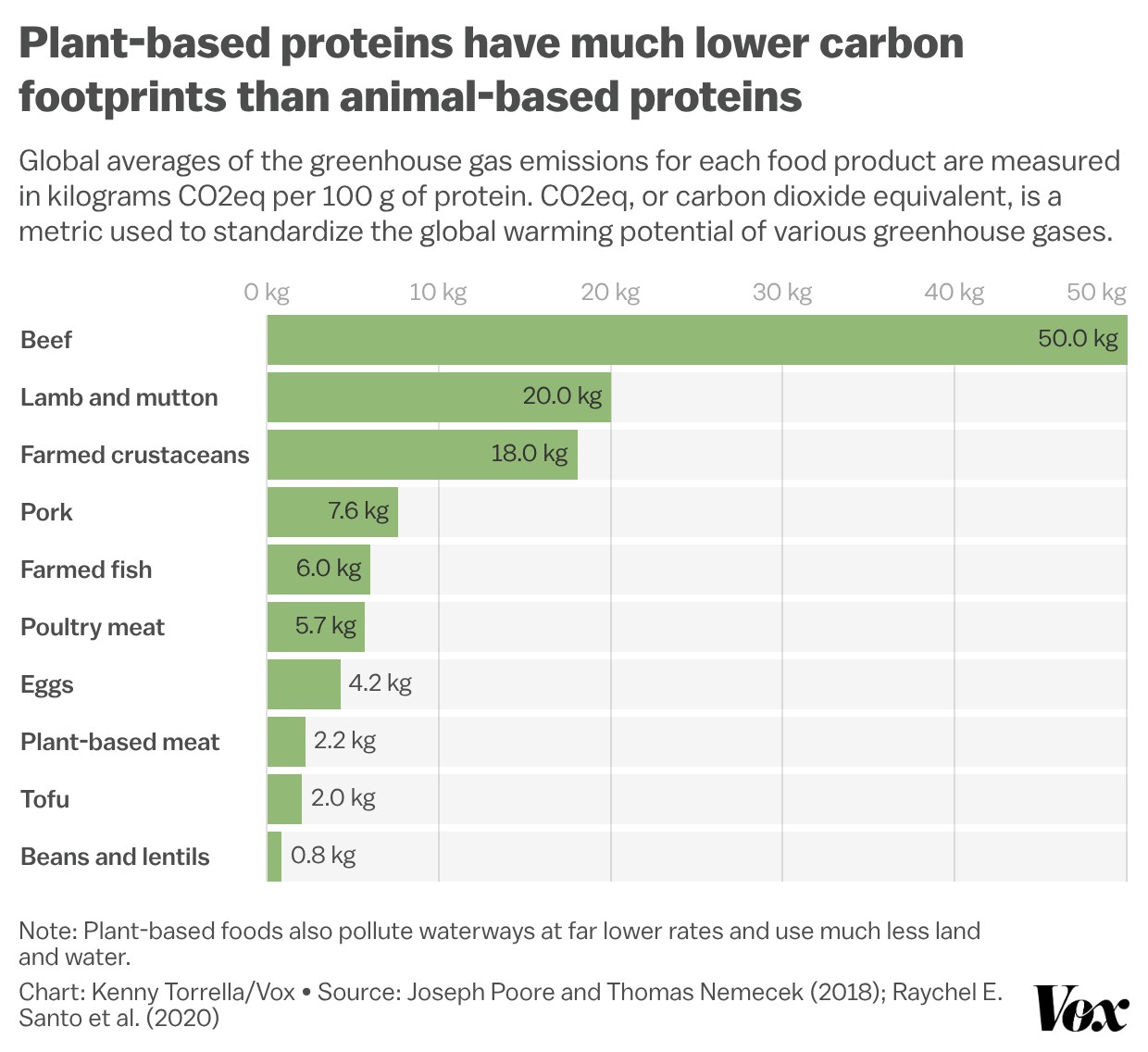
Globally, meat and dairy production is one of the leading drivers of climate change, accounting for 14.5 percent to 19 percent of global greenhouse gas emissions (including from fertilizer production, manure, deforestation, and, yes, cows’ methane-rich burps). Meanwhile, plant-based protein sources, like Impossible burgers, beans, and tofu, have much lower carbon footprints than beef, pork, and chicken.
Aside from hard data, compelling evidence on the necessity of plant-rich diets also comes from scientists themselves. In a 2021 survey of more than 200 agricultural and environmental scientists, most ranked “reducing meat and dairy consumption” as the most effective way to reduce agricultural climate emissions.
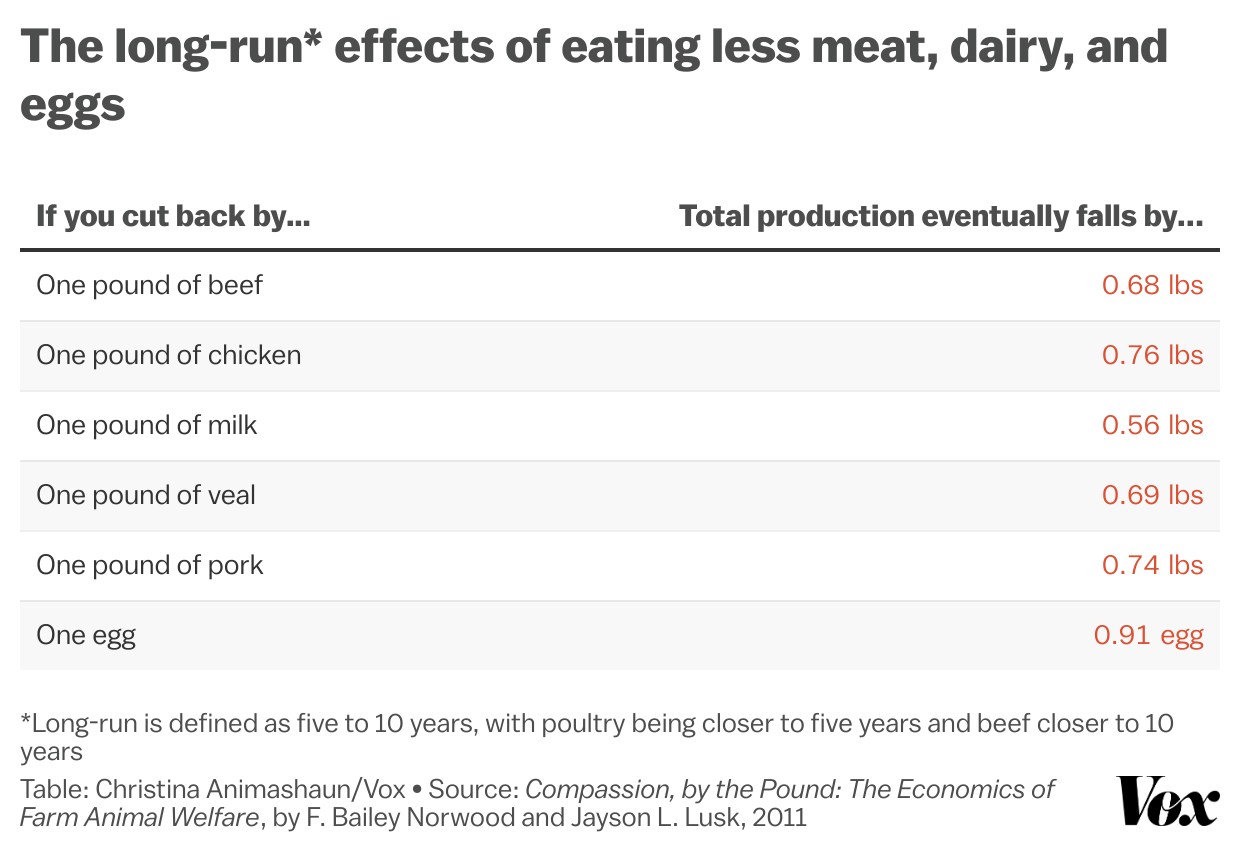
And if you’re worried that your individual actions don’t actually matter, consider this table below. It’s from leading agricultural economists Jayson Lusk and Bailey Norwood of Oklahoma State University, who crunched the numbers and determined that when consumers buy less meat, eggs, and milk, it truly does reduce production of them (more on that here).
What’s more, embracing a plant-rich diet is also much better for your health and, of course, helps to reduce the number of animals reared on cruel factory farms.
In the long run, like every other polluting industry, significant change will also have to come from governments and corporations. But so far, the meat industry has been highly effective at beating back environmental regulations. It’s hard to see how that’ll change unless more people demand it. We can start — one meal at a time — with what we eat. And we’ve got you covered with resources to get started: Check out Meat/Less, Vox’s practical guide to eating less meat and more plant-based foods.
Recent Comments